Ever been slammed by a tight deadline or stuck staring at a blank page? I’ve lost count of how many times; it’s stressful and overwhelming.
While AI writers can swoop in like Superman to save the day, I must say that the rescue isn’t ever a perfect one.
It’s often frustrating to see these tools produce content that lacks any personality whatsoever. It all comes off as bland, generic, and even robotic.
Without that emotional component, I have often found reading AI content to be a rather monotonous and boring experience.
The only solution to fix this is by humanizing the AI-generated text. But how can you go about this? Well, that’s easy because I’m going to show you!
Here, I will explore 10 different ways that you can try and use to make any AI content sound more authentic and engaging.
Are you ready?!
Top 10 Proven Strategies for Humanizing AI Text
Let me quickly sum them up in a short overview below:
- Use an AI Humanizer: BypassGPT
- Rewrite the AI Content Yourself
- Add Some Personal Context
- Engage with Readers' Emotions
- Ask ChatGPT to Revise the Text
- Be Precise with Your Prompts
- Eliminate Repetitive Wording
- Keep the Writing Simple
- Vary the Sentence Structures
- Add Intentional Mistakes
#1. Use an AI Humanizer: BypassGPT
The first method I explored was using an AI humanizer. Now, I’m all about humanizing AI text, but if I can do it the easy way, then that’s even better, right?
This led me to find the perfect quick fix, which is BypassGPT! I can use it to instantly rewrite AI content to sound more human-like.
Humanize AI Text with BypassGPT
From what I’ve seen, the tool doesn’t just paraphrase text. It works by eliminating common markers that most AI detectors are trained to look out for.
So, any overly-complex wording, repetitive syntax, or predictable phrasing that the original text had was entirely replaced throughout the entire content structure.
After reviewing it, I could also tell that the new version of text it generated was far more authentic, engaging, and natural-sounding than the original.
I’ll admit some of the iterations it generates aren’t perfect. Some humanized versions may still be detected by AI tools or require some editing for better flow and readability.
But for the most part, I can say that BypassGPT can deliver 100% human scores on Originality.AI, GPTZero, ZeroGPT, Turnitin, Copyleaks, Scribbr, and more.
See How Well BypassGPT Humanize AI Text
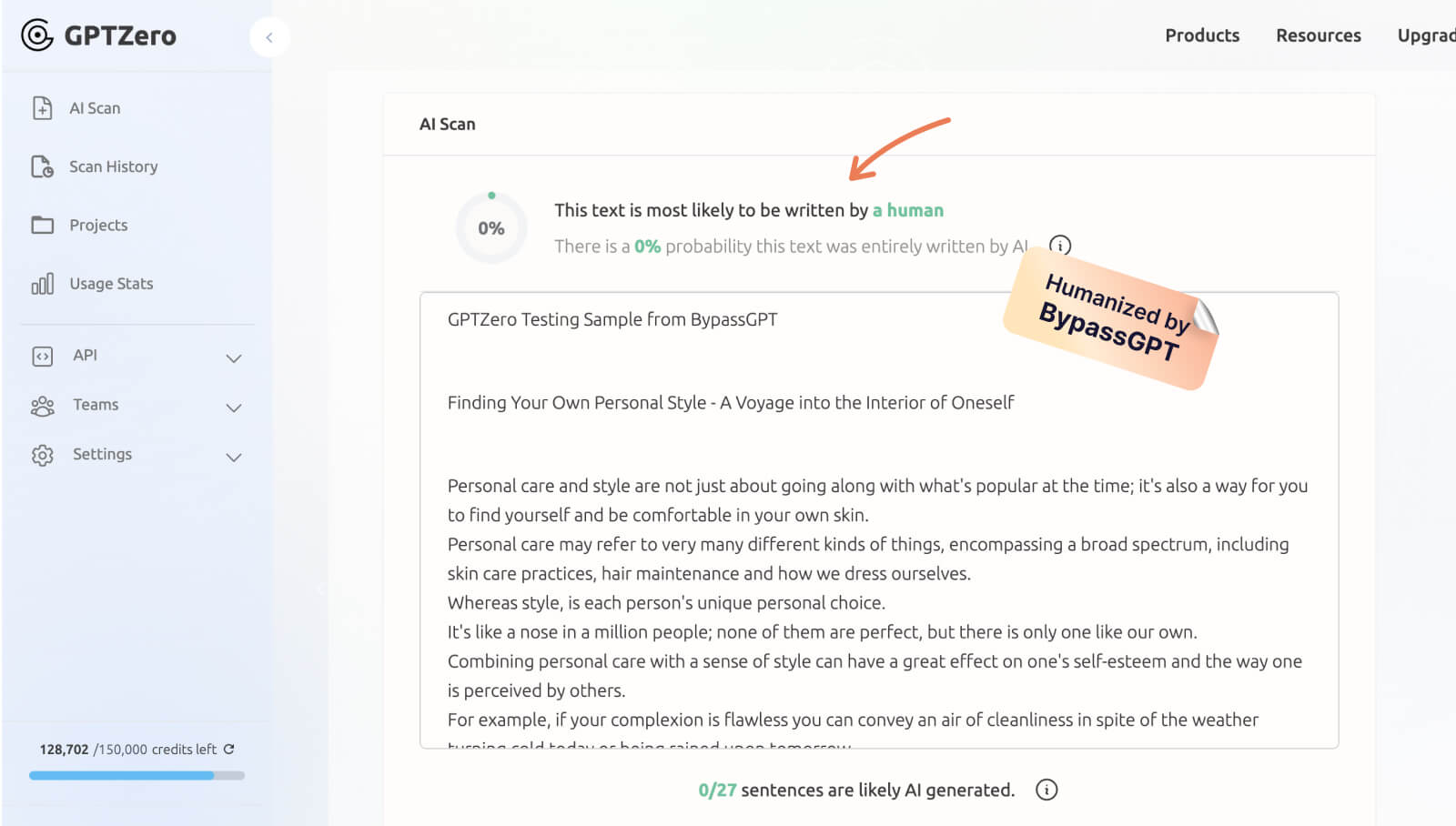
Why Humanize AI Text with BypassGPT?
While its ability to bypass AI detectors is important, there are other reasons why I think this AI humanizer can be a valuable asset to anyone’s daily workflow.
Some of the key points that I suggest you consider include:
- Boost SEO Rankings: Have you seen Google’s AI content guidelines? If not, then let me remind you to avoid publishing AI content with no revision whatsoever. You need to make it original, insightful, and human-like enough to avoid any unwanted penalties, which is where I believe BypassGPT can be a lifesaver.
- Maintain Industry Reputation: As a reader, I will admit that seeing any industry expert use AI to create content isn’t very reassuring. Like most people, I would prefer the advice or information to not just be generic. So, if you want to maintain credibility, I find that BypassGPT can deliver that extra human touch it needs to remain unique.
- Appeal to Global Audiences: I wish I could speak dozens of different languages. This would let me better connect with native readers around the world. So, when I discovered that BypassGPT offers multilingual support, I was super excited. Whether it’s Spanish, Hindi, Mandarin, French, Japanese, Portuguese, etc, this tool can humanize it.
- Improve Content Readability: As I’ve already pointed out, AI content often comes off as bland and uninspiring. Frankly, I can assure you that no one wants to read that kind of content for very long. I know I don’t! But I find that how BypassGPT humanizes AI text can make it a little easier to stay hooked from start to finish.
Does BypassGPT Truly Work to Humanize AI Text?
I hope you didn’t think I would recommend BypassGPT without showing you some proof that it works?! I carried out a test of my own just for your reassurance.
To start, I generated a short piece of text using ChatGPT, as you can see below:
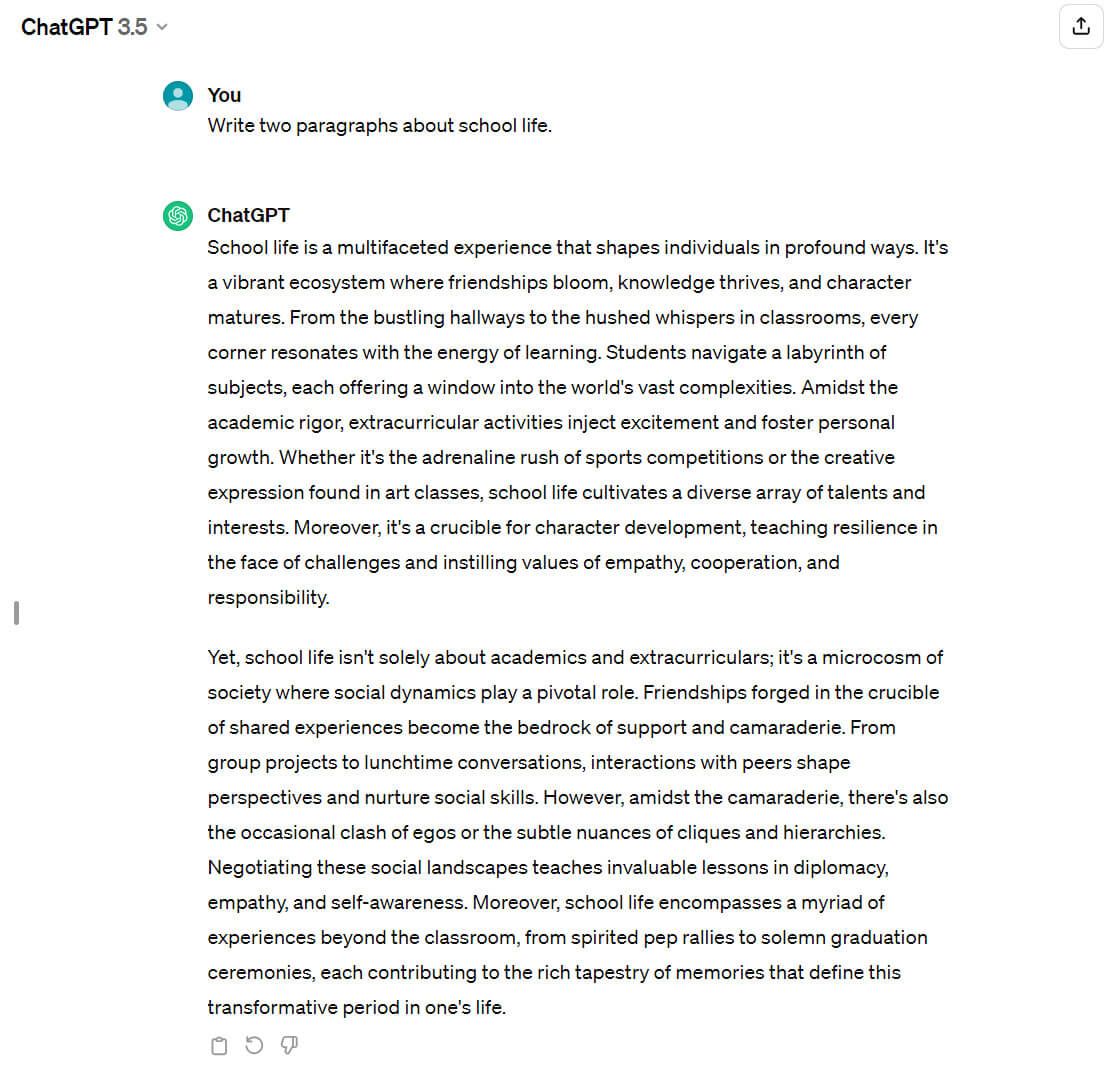
From there, I scanned the AI-generated text on the most advanced AI detectors—Originality.ai, GPTZero, and Content at Scale— just to verify the text is AI.
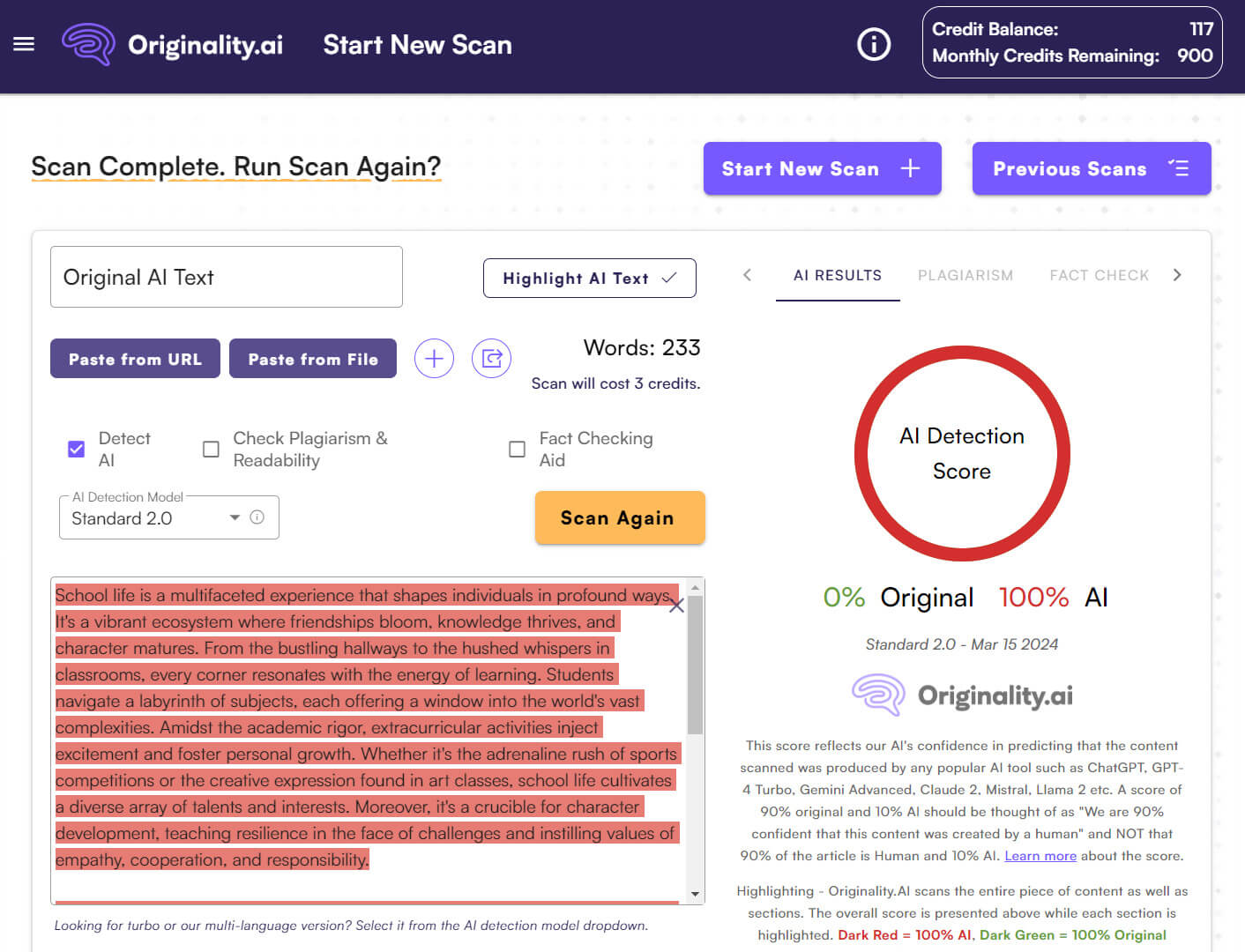
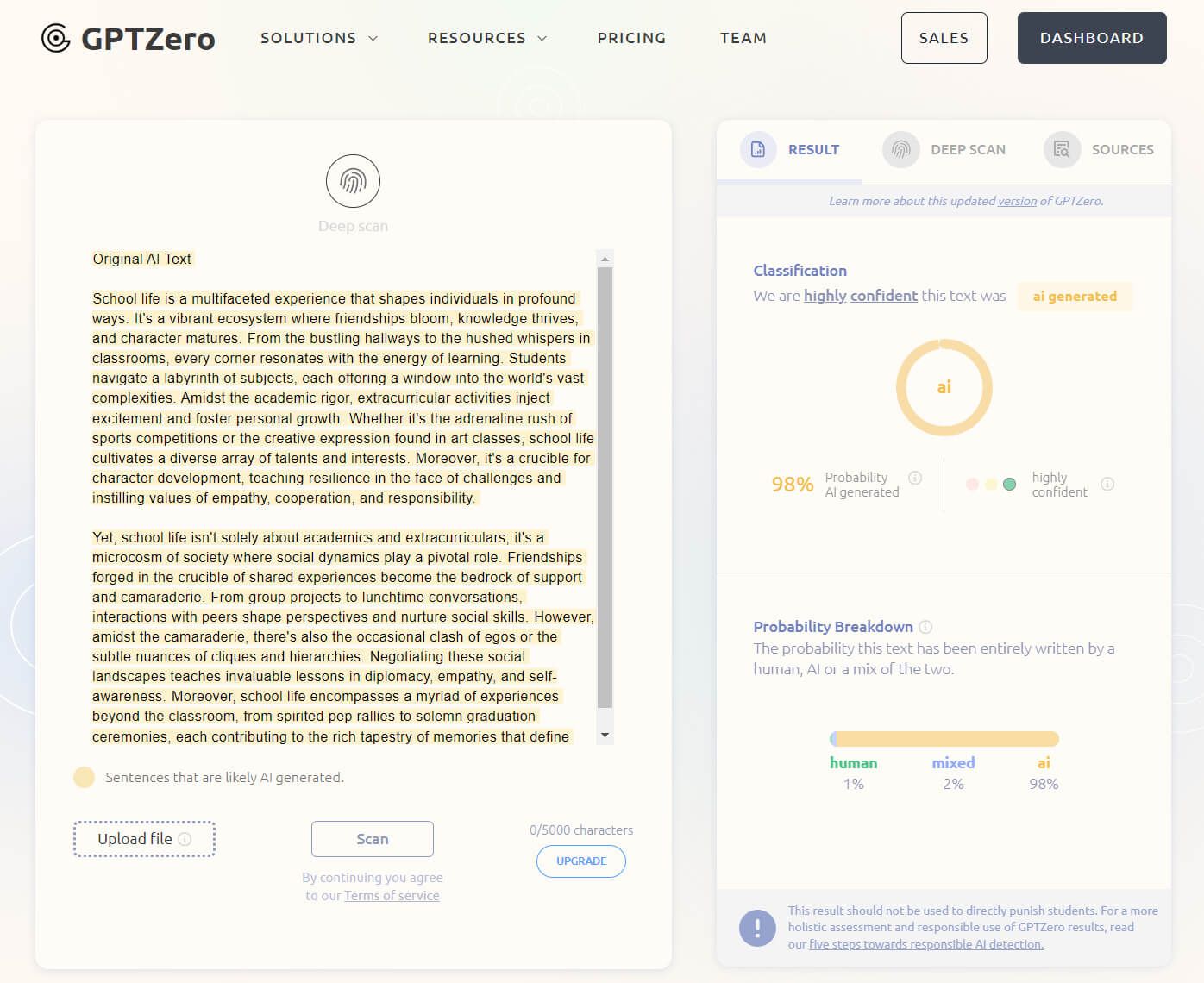
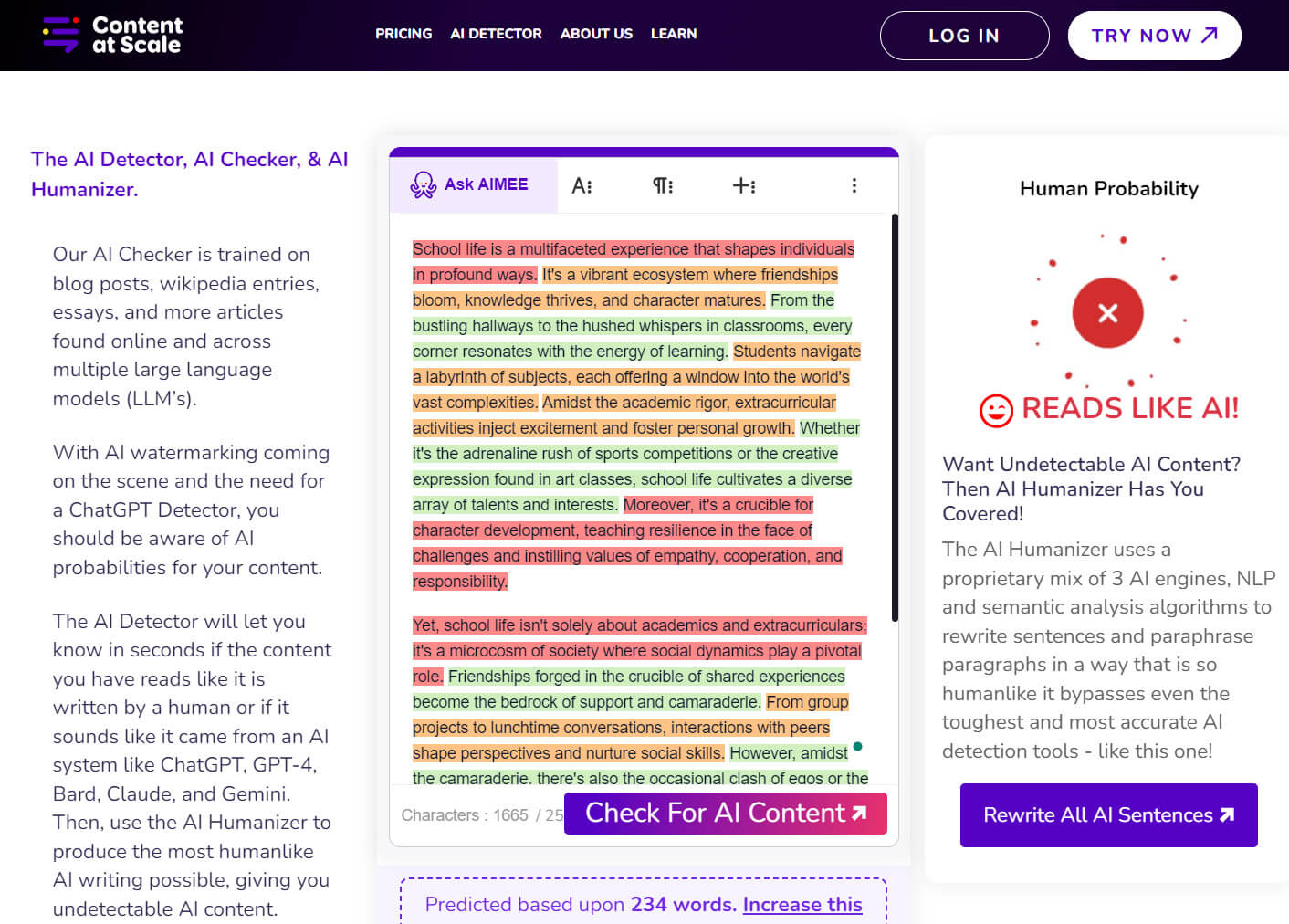
| AI Detectors | AI Detection Results |
| Originality.ai | 0% Human, 100% AI |
| GPTZero | 1% Human, 2% Mixed, 98% AI |
| Content at Scale | Reads like AI |
As you can see, all three AI detectors confirmed the text was AI-generated. After this, I headed over to BypassGPT to humanize the AI content. Check it out here:
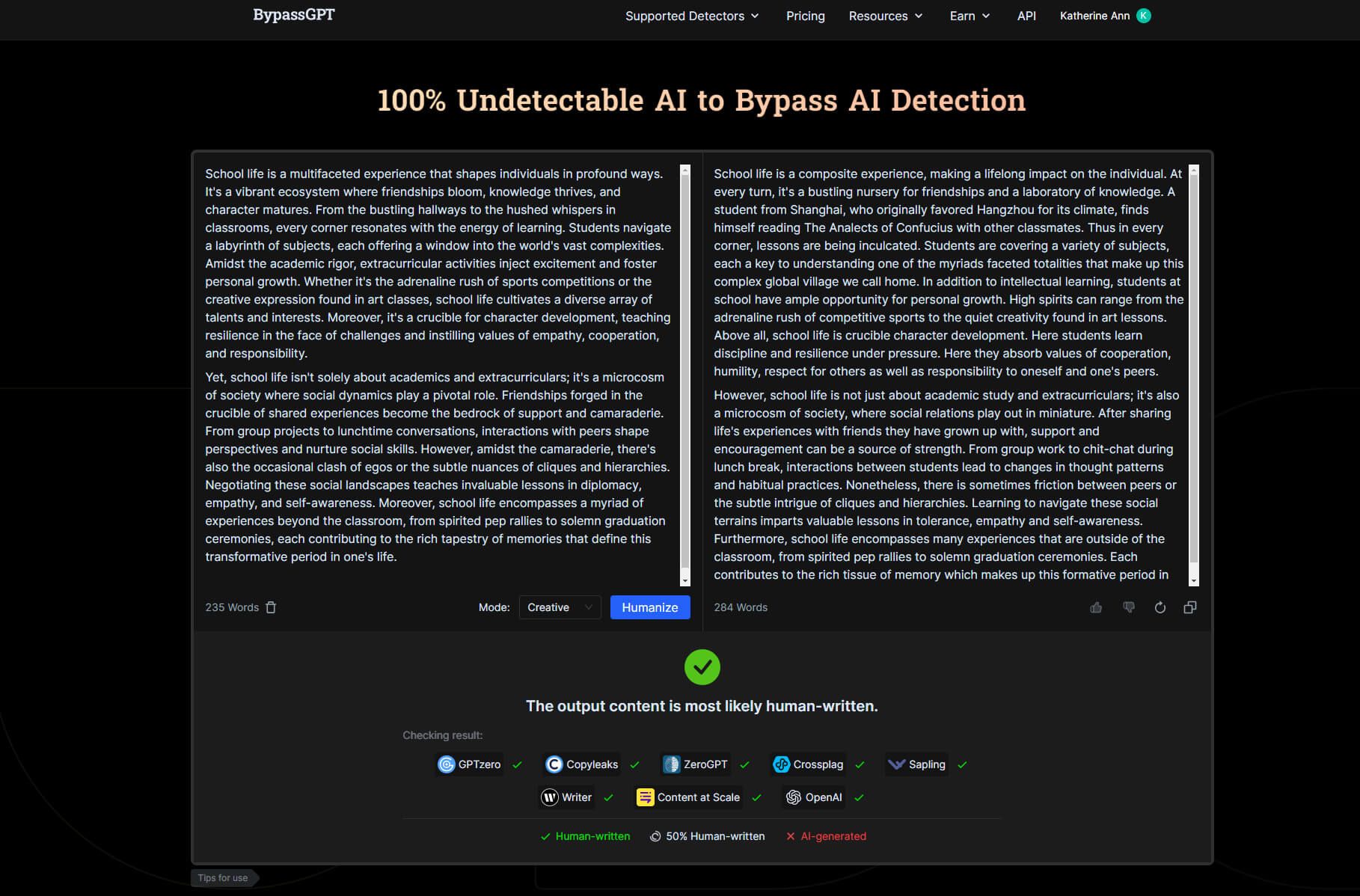
The only thing left was to verify the AI detection score of this new humanized version. Once again, I scanned the new text on all three AI detection tools.
Here’s what the final AI scans produced:
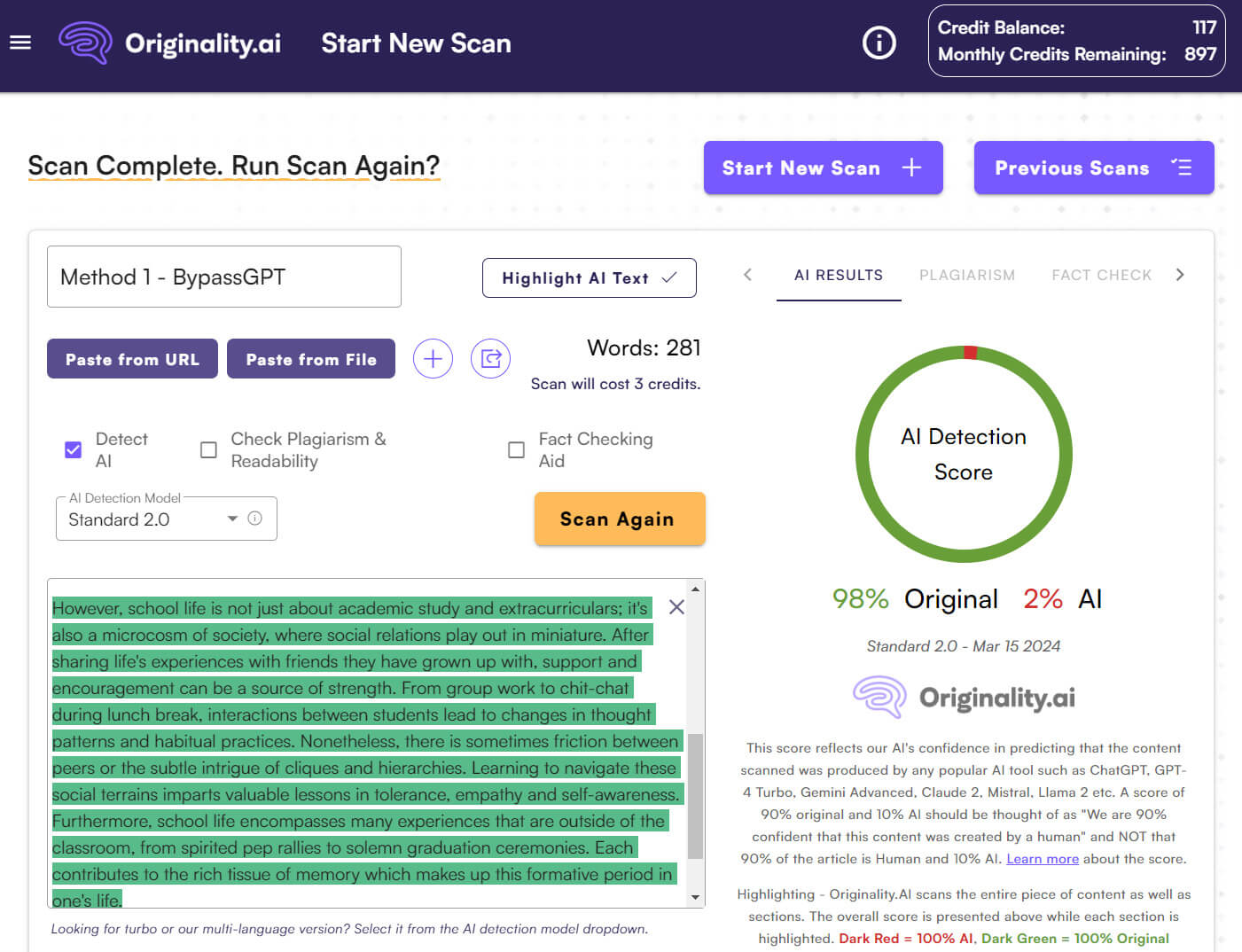
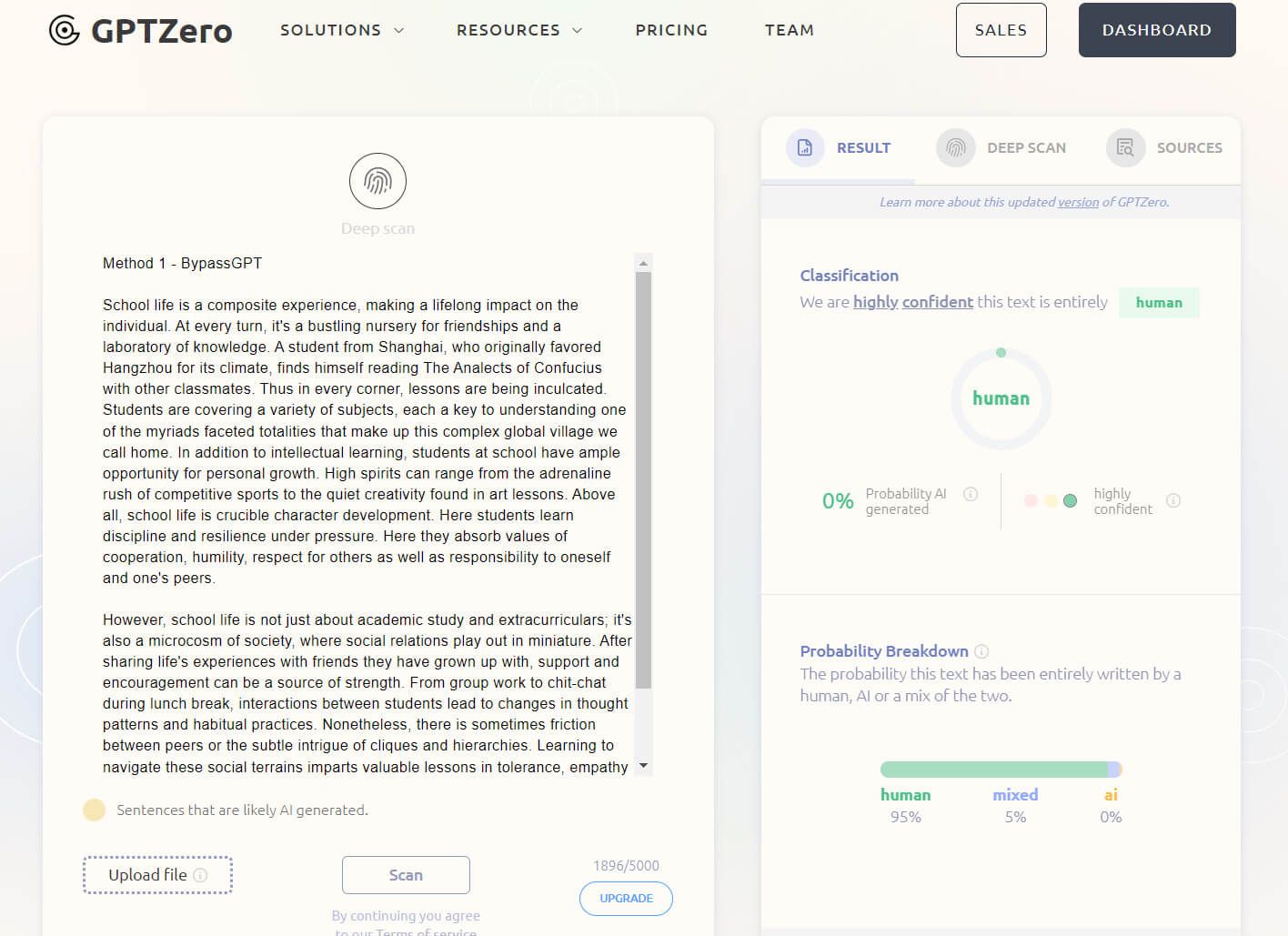
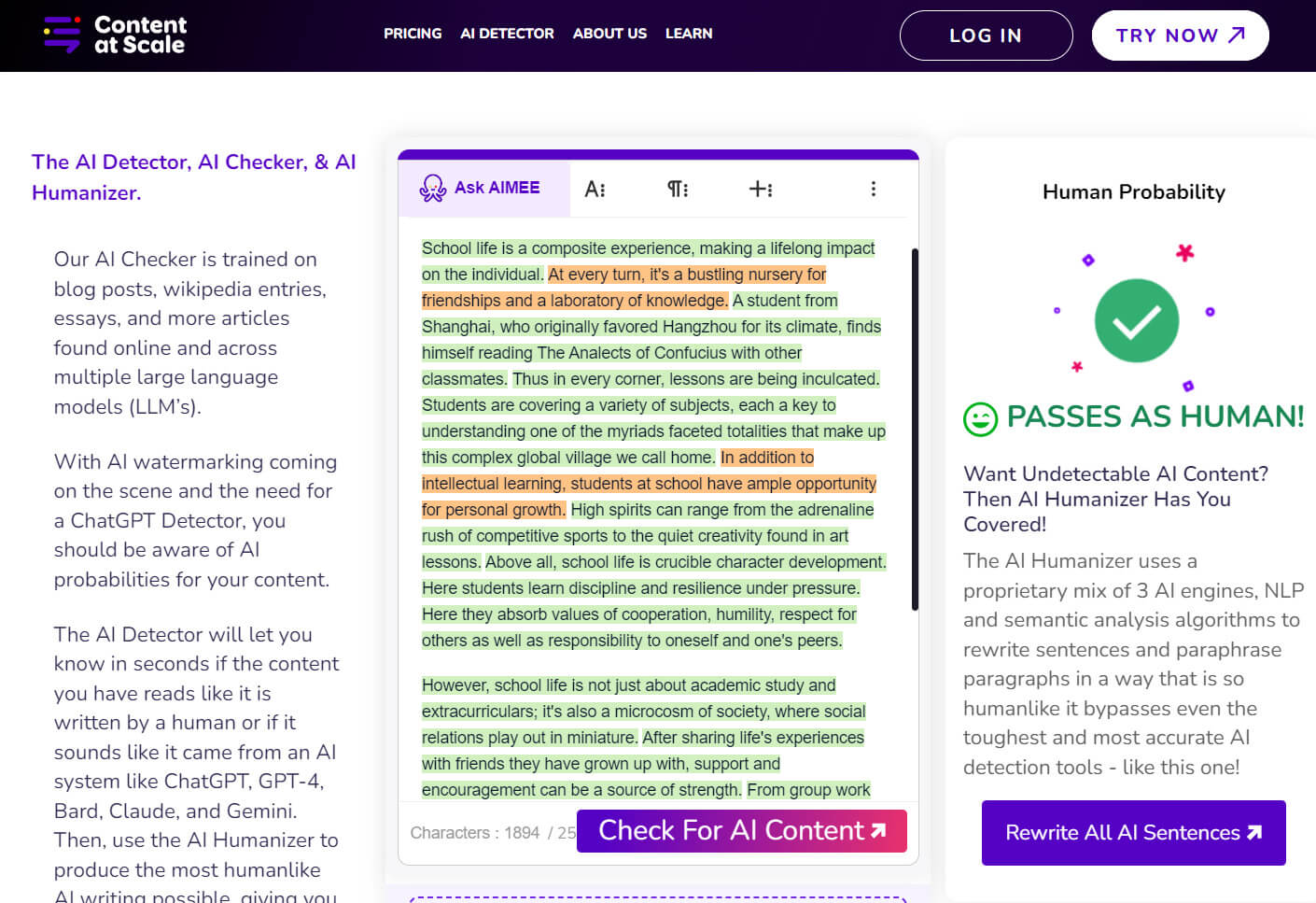
| AI Detectors | AI Detection Results - After | AI Detection Results - Baseline |
| Originality.ai | 98% Human, 1% AI | 0% Human, 100% AI |
| GPTZero | 95% Human, 5% Mixed | 1% Human, 2% Mixed, 98% AI |
| Content at Scale | Passes as human | Reads like AI |
As expected, it was a near-perfect score all round! BypassGPT made the AI content I pasted come across as authentically human, and all it took was a few clicks!
Other 9 Practical Strategies for Humanizing AI Text
While I would take BypassGPT any day to solve my AI humanization problems, there are times when you would rather handle the edits yourself.
After all, I sometimes find it a bit inconvenient that I can’t control the type of output the AI humanizer churns out. So, I’ve also explored 9 other practical strategies to consider.
Some of these methods work and others not so much. But for the sake of clarity, I will dive into and even test out all of the most popular ones.
#2. Rewrite the AI Content Yourself
Now, I will admit this isn’t my favorite AI humanization method. But, rewriting AI content manually is still an effective way to add that much-needed human touch.
After all, if you employ your own unique writing style, then you can eliminate that "robotic-ness" that makes AI content so uninteresting to read and easily detectable.
In this respect, I rewrote the ChatGPT-generated text from before in my own style, which you can feel free to review below:
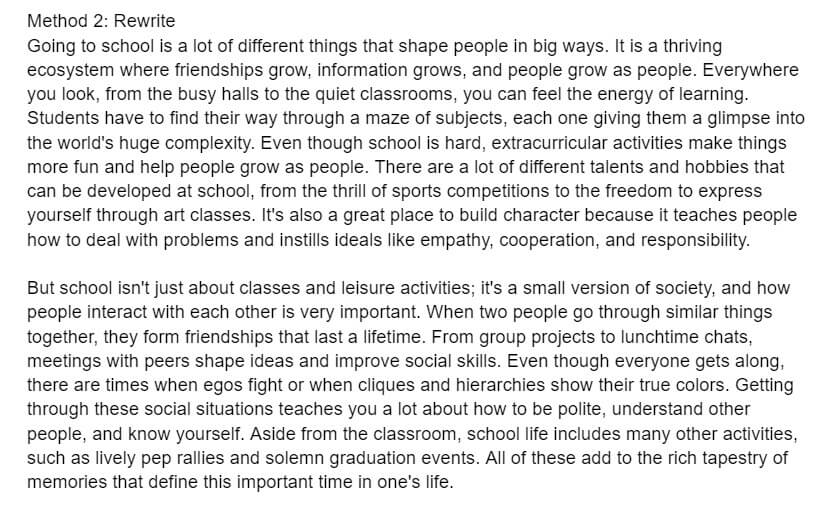
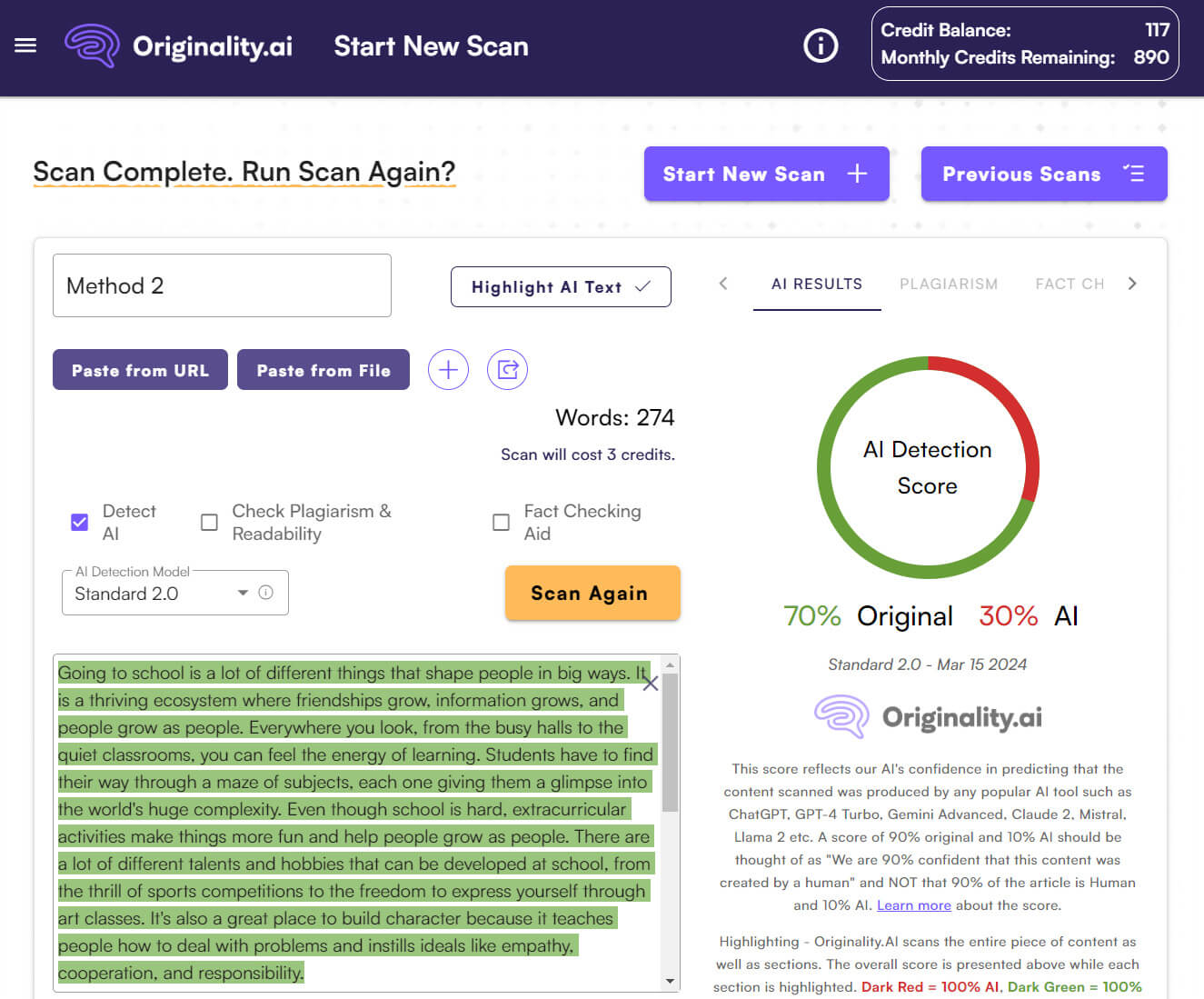
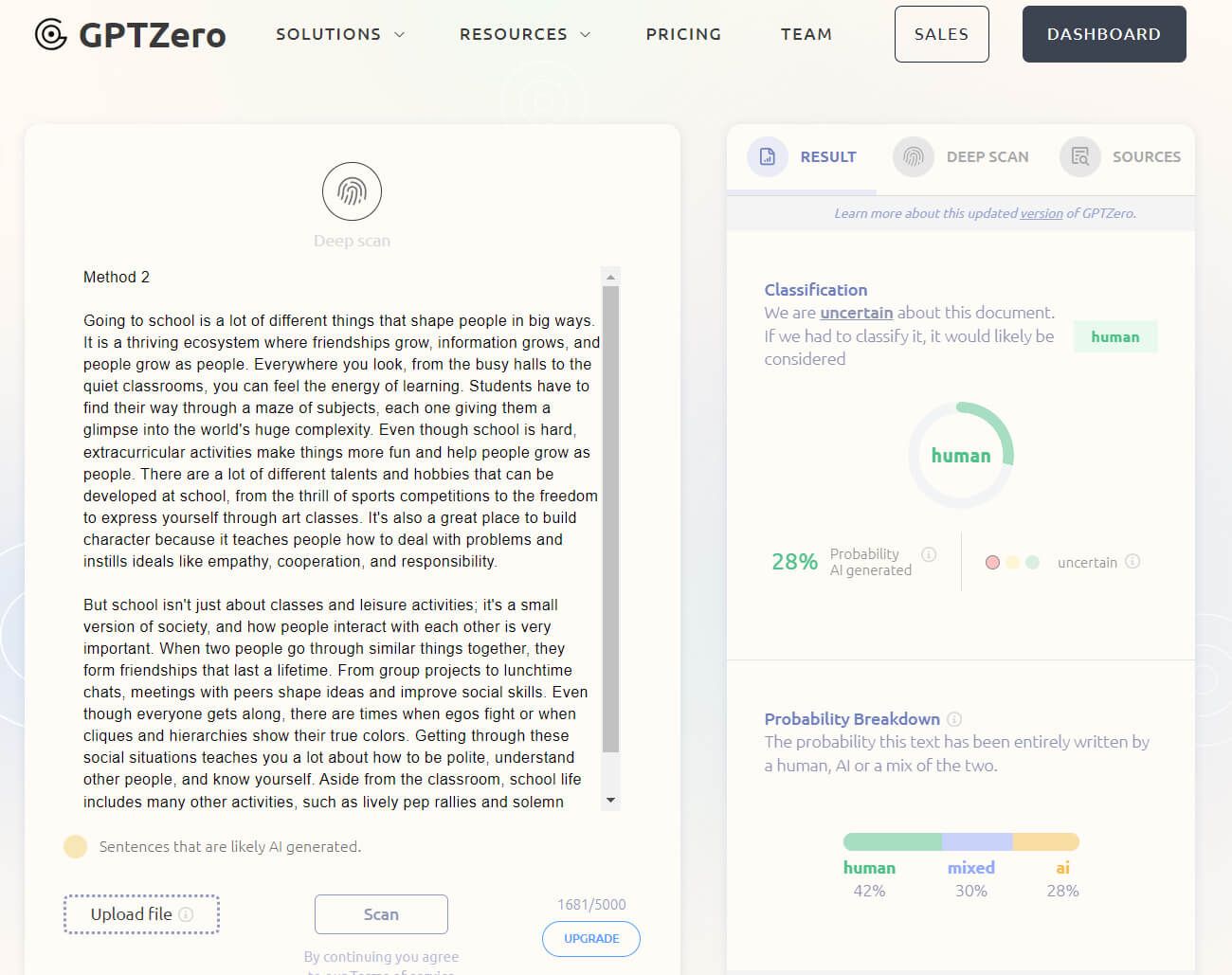
Next, I scanned it on the three AI detectors and these were the results:
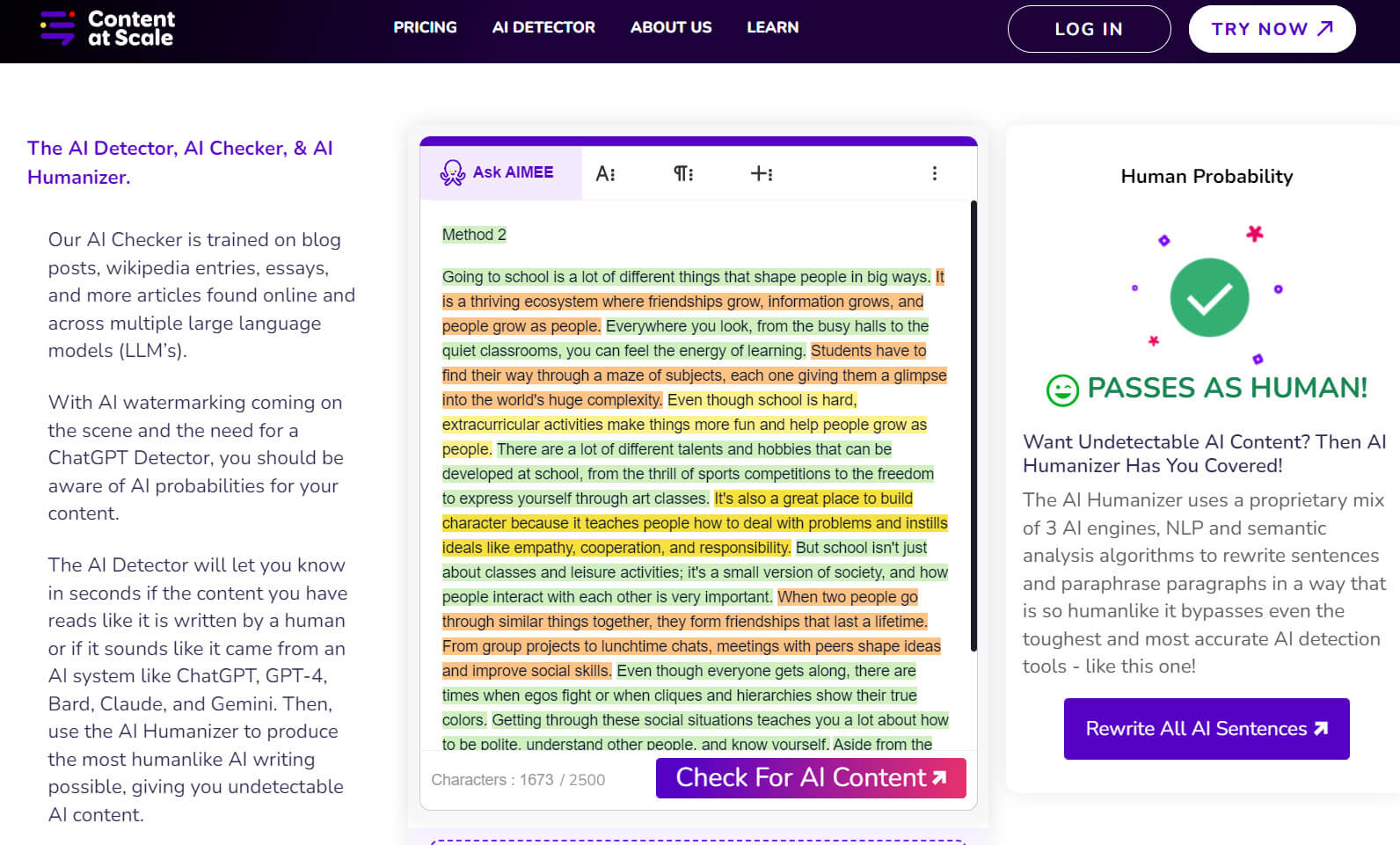
| AI Detectors | AI Detection Results - After | AI Detection Results - Baseline |
| Originality.ai | 70% Human, 30% AI | 0% Human, 100% AI |
| GPTZero | 42% Human, 30% Mixed, 28% AI | 1% Human, 2% Mixed, 98% AI |
| Content at Scale | Passes as human | Reads like AI |
As you can see, rewriting does do a fair job at making AI text seem less artificial. I find the results were a bit more of a mixed bag, but it’s still an undeniable shift across the board.
#3. Add Some Personal Context
AI writers can produce content with facts and data but to make it all sound more human, I would suggest trying to add in real-life examples, personal anecdotes, insights, etc.
This can help at times because AI writers can’t replicate real human experiences. So, revising the AI content in this manner can often work to confuse AI detectors.
To show this in action, I added a personal story of my own within the second paragraph of the ChatGPT content. You can read it below:

Now, discover what the three AI detectors had to say about it here:
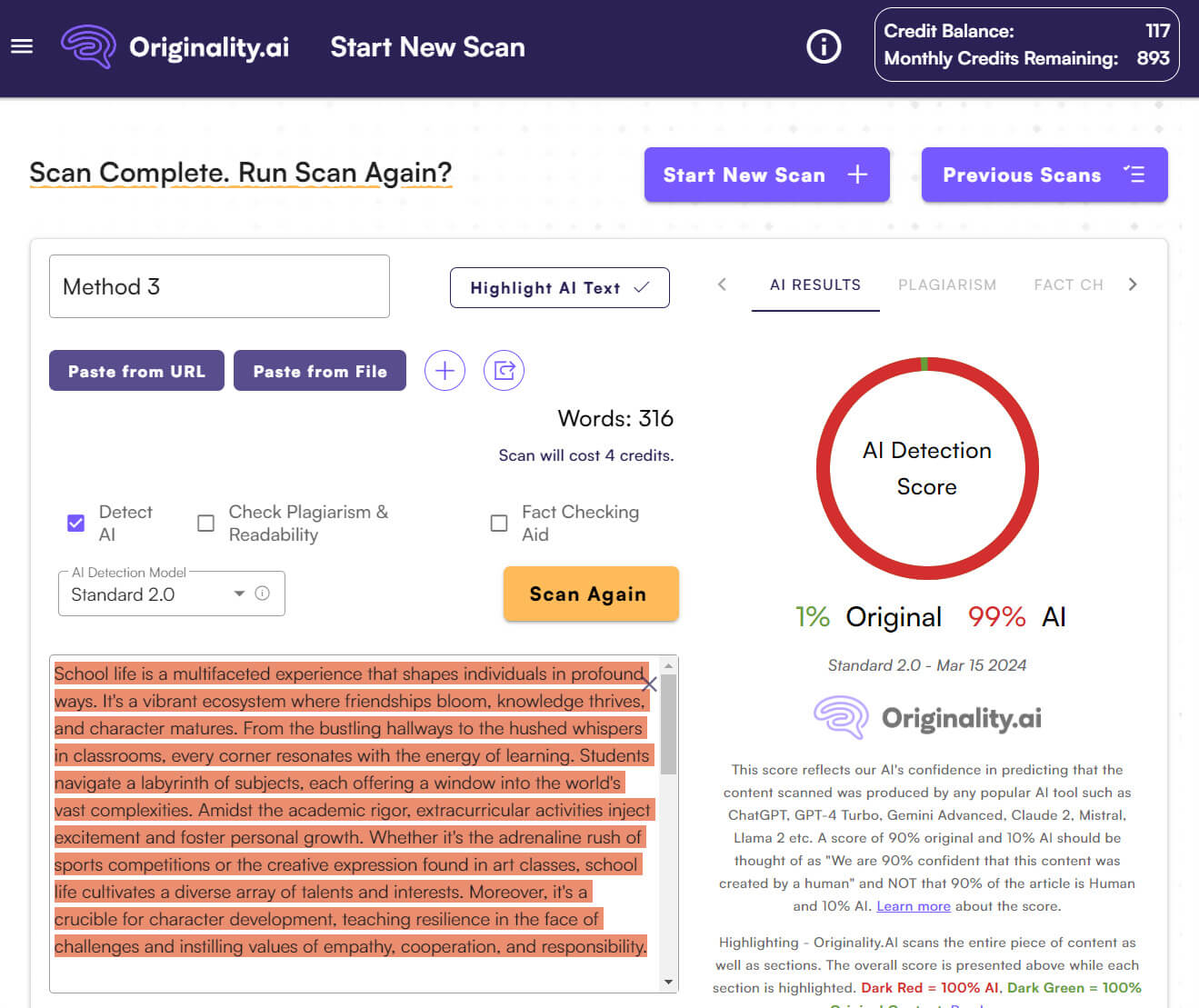
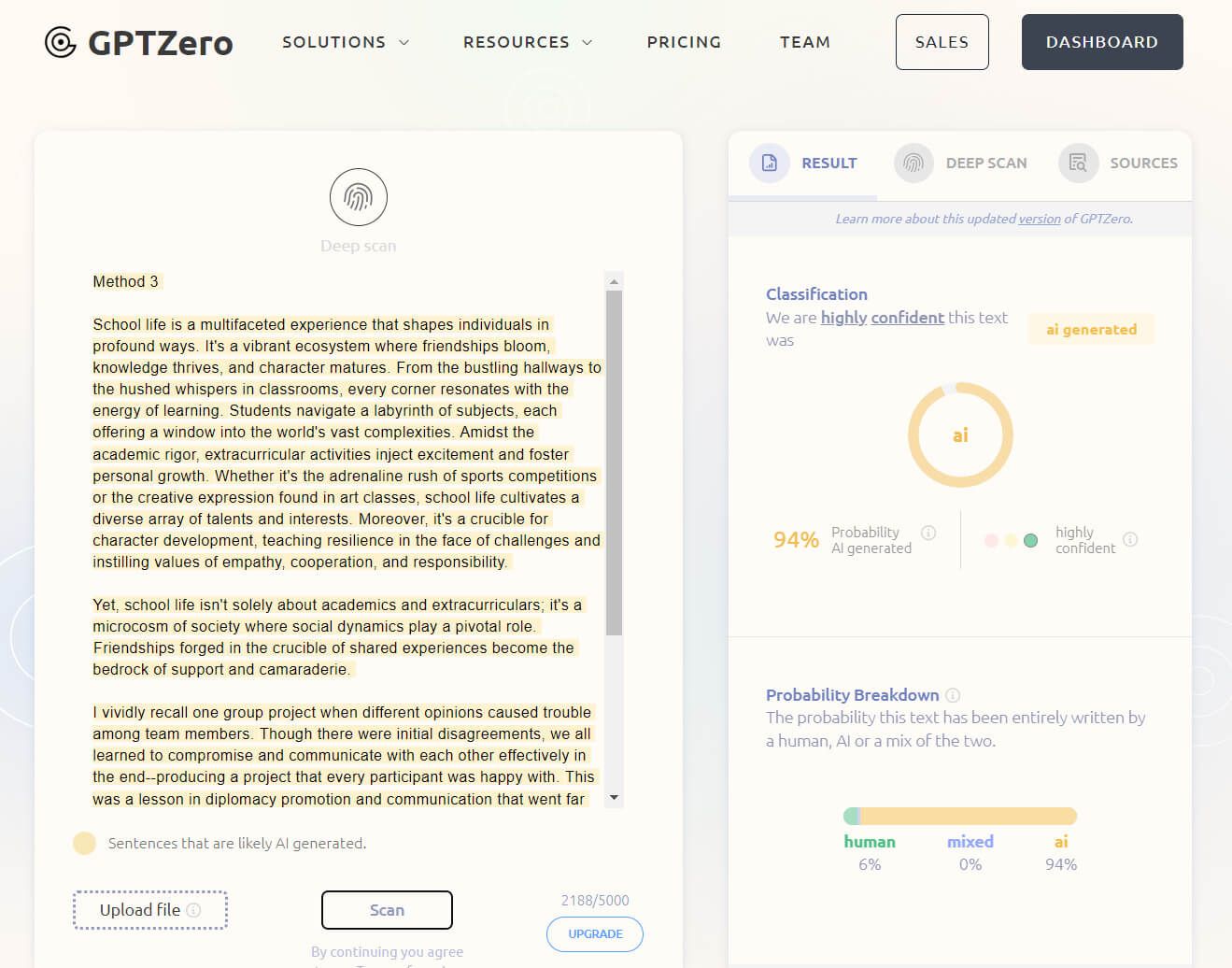
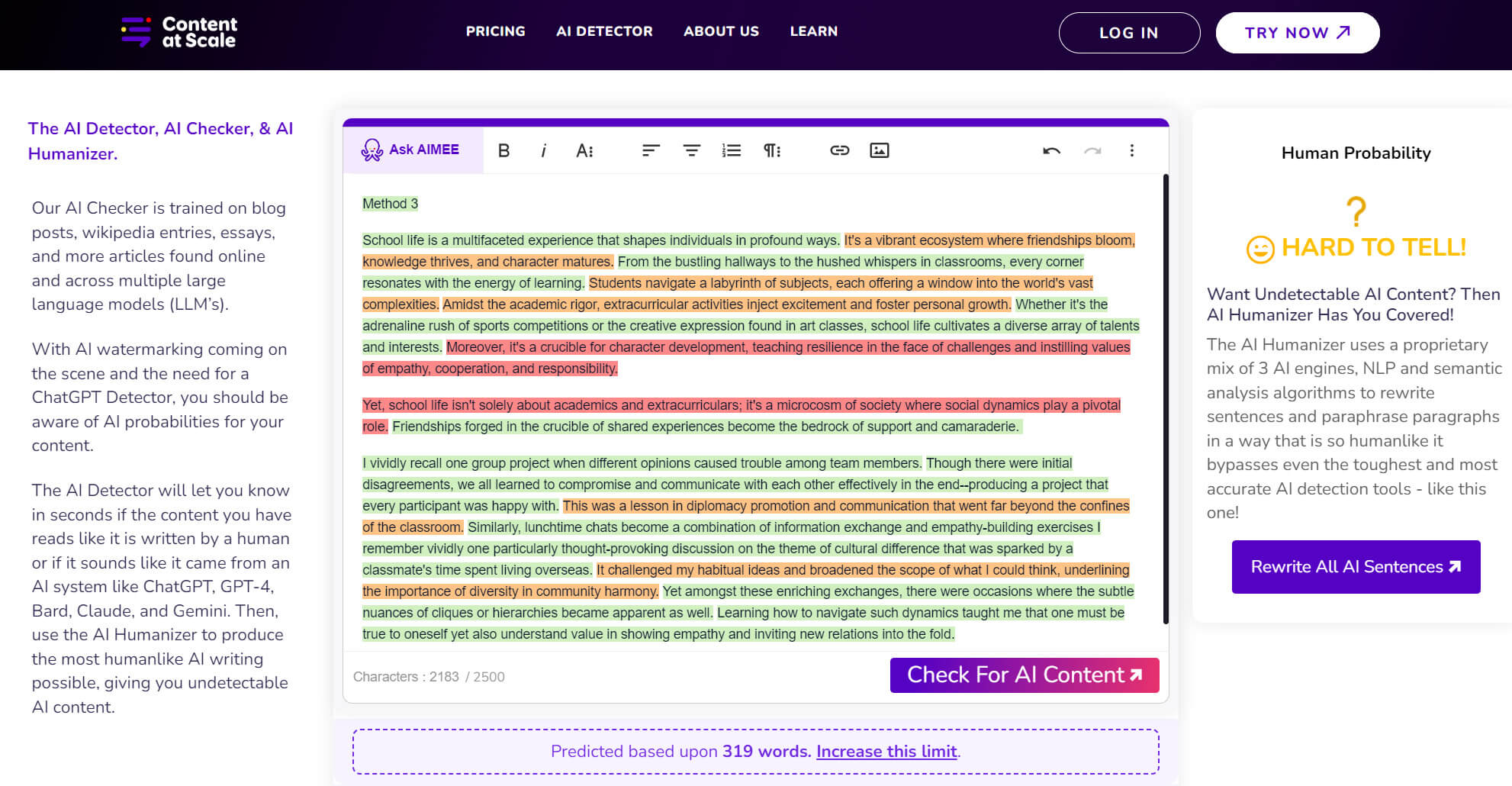
| AI Detectors | AI Detection Results - After | AI Detection Results - Baseline |
| Originality.ai | 1% Human, 99% AI | 0% Human, 100% AI |
| GPTZero | 6% Human, 0% Mixed, 94% AI | 1% Human, 2% Mixed, 98% AI |
| Content at Scale | Hard to Tell | Reads like AI |
This time around, the revised text still showed AI involvement. Disappointing, but I can point out that the method can work since it did successfully confuse one of the AI detectors.
#4. Engage with Readers Emotions
I’ve always been frustrated by the lack of emotion in AI content. But, this also creates some room for improvement that can ensure you get past AI detection scans.
If I were to put it in another way, can you convey empathy and talk about stories that resonate with others? If you can, then you can make it sound human-like enough.
For this sample test, I specifically asked ChatGPT to add some humor, passion, frustration, or excitement wherever appropriate into the AI-generated content.
This is what it produced after my request:
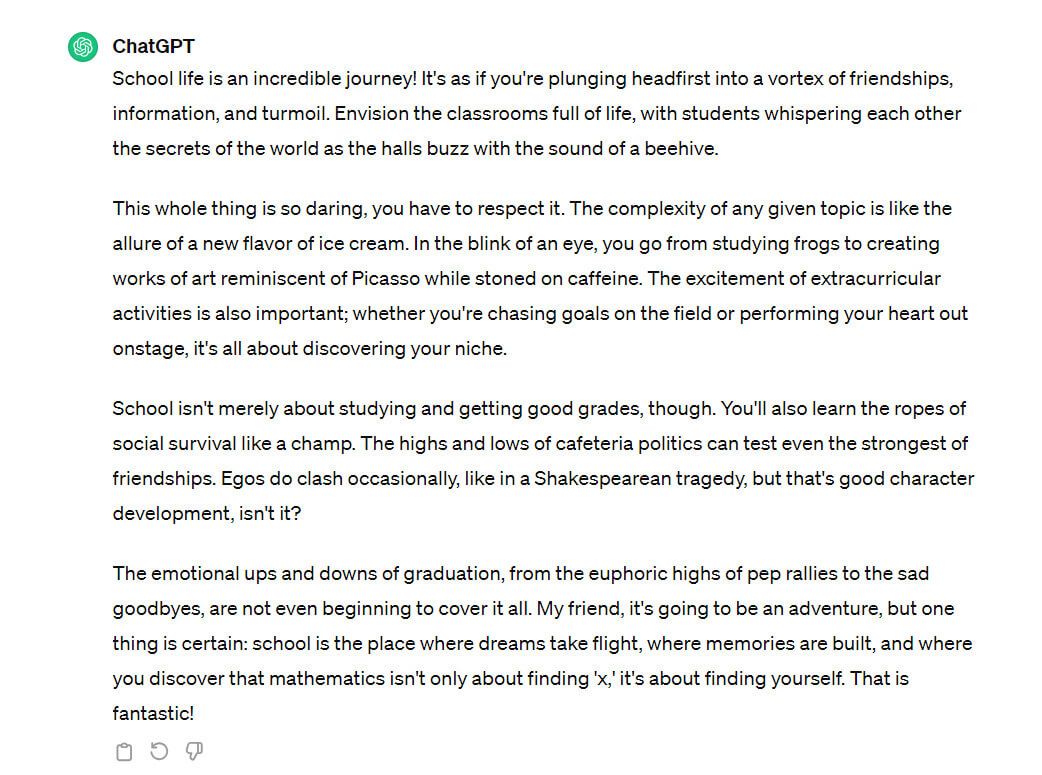
Want to know what the three AI detectors had to say about it? Check it out:
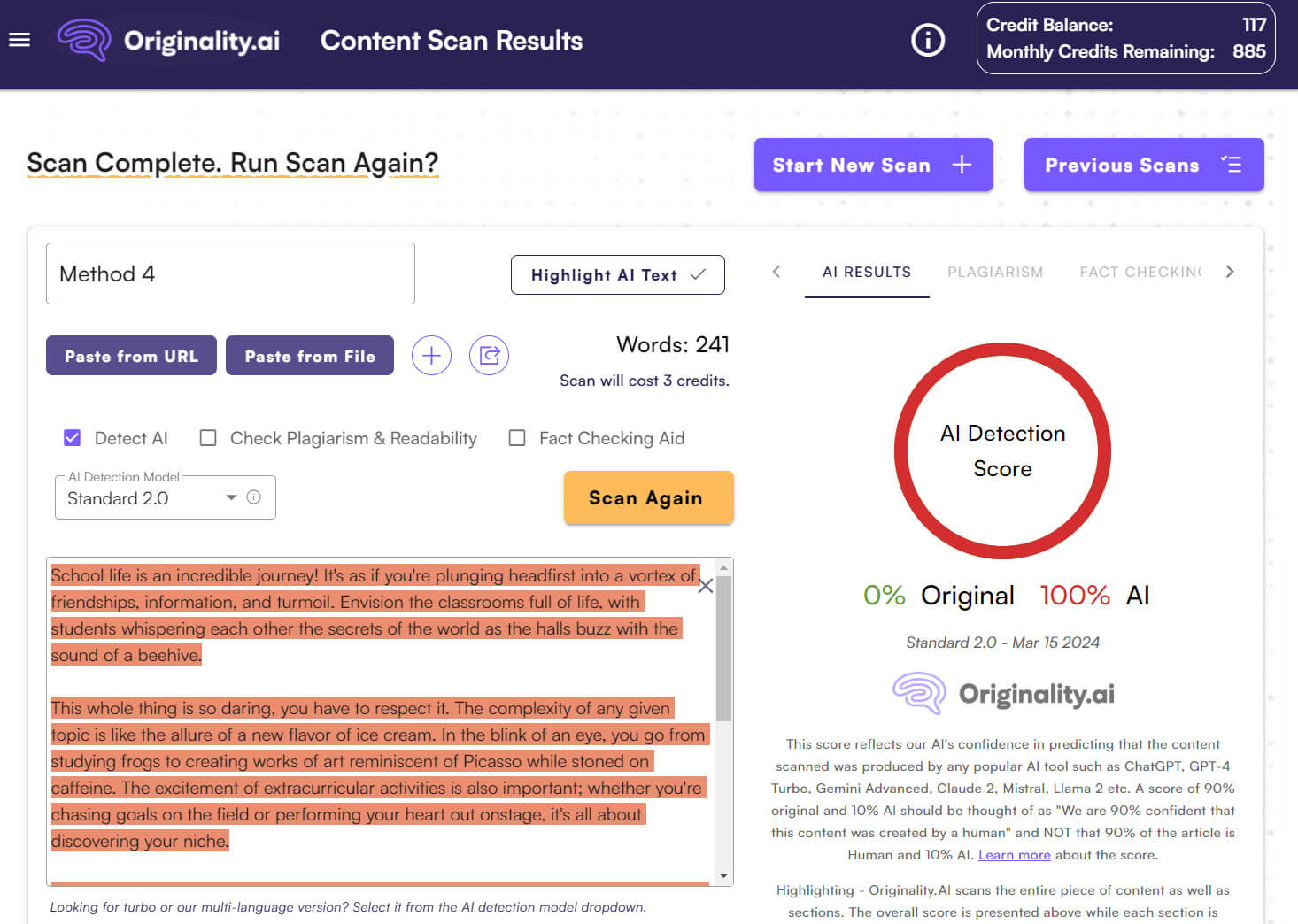
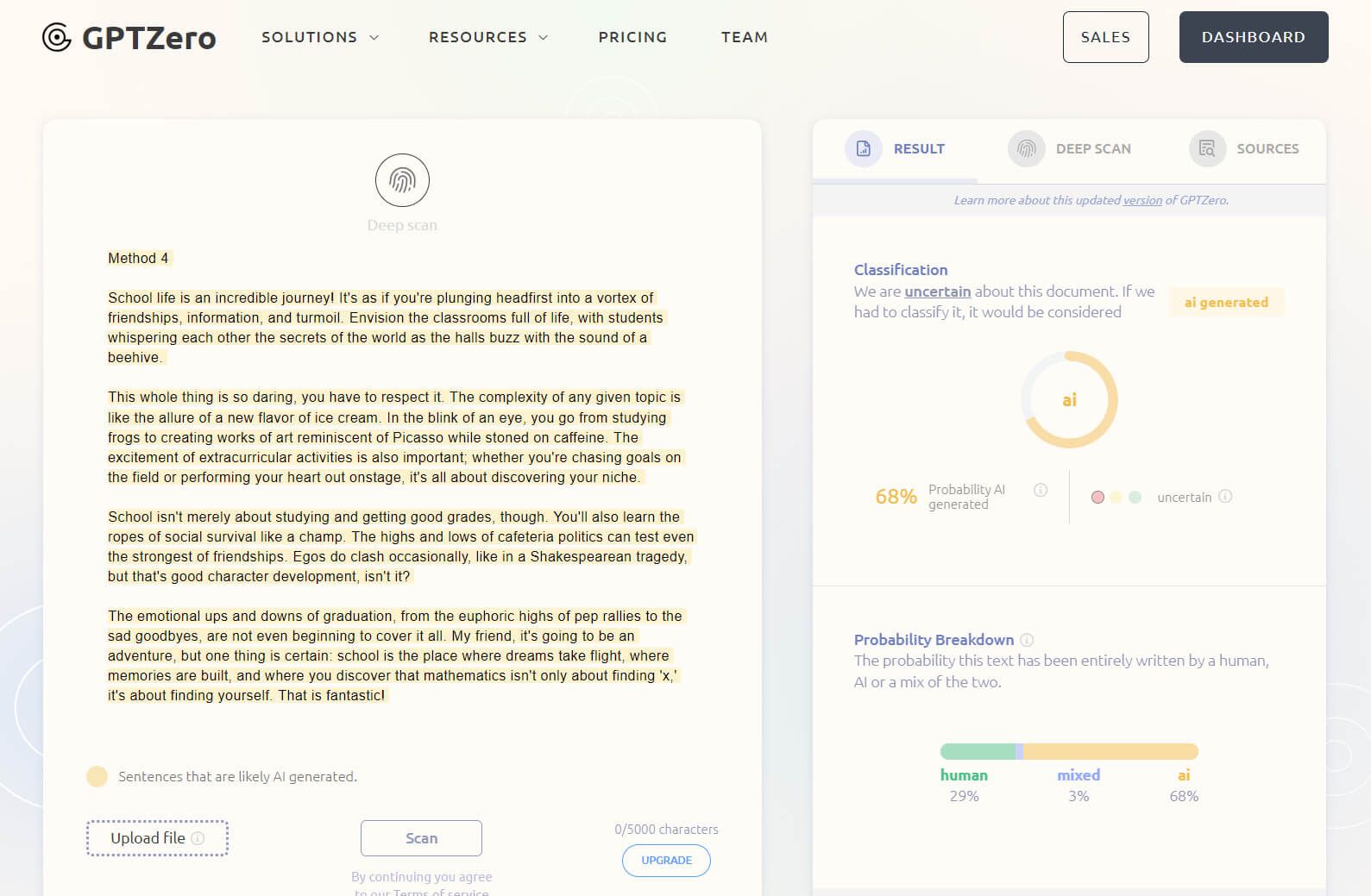
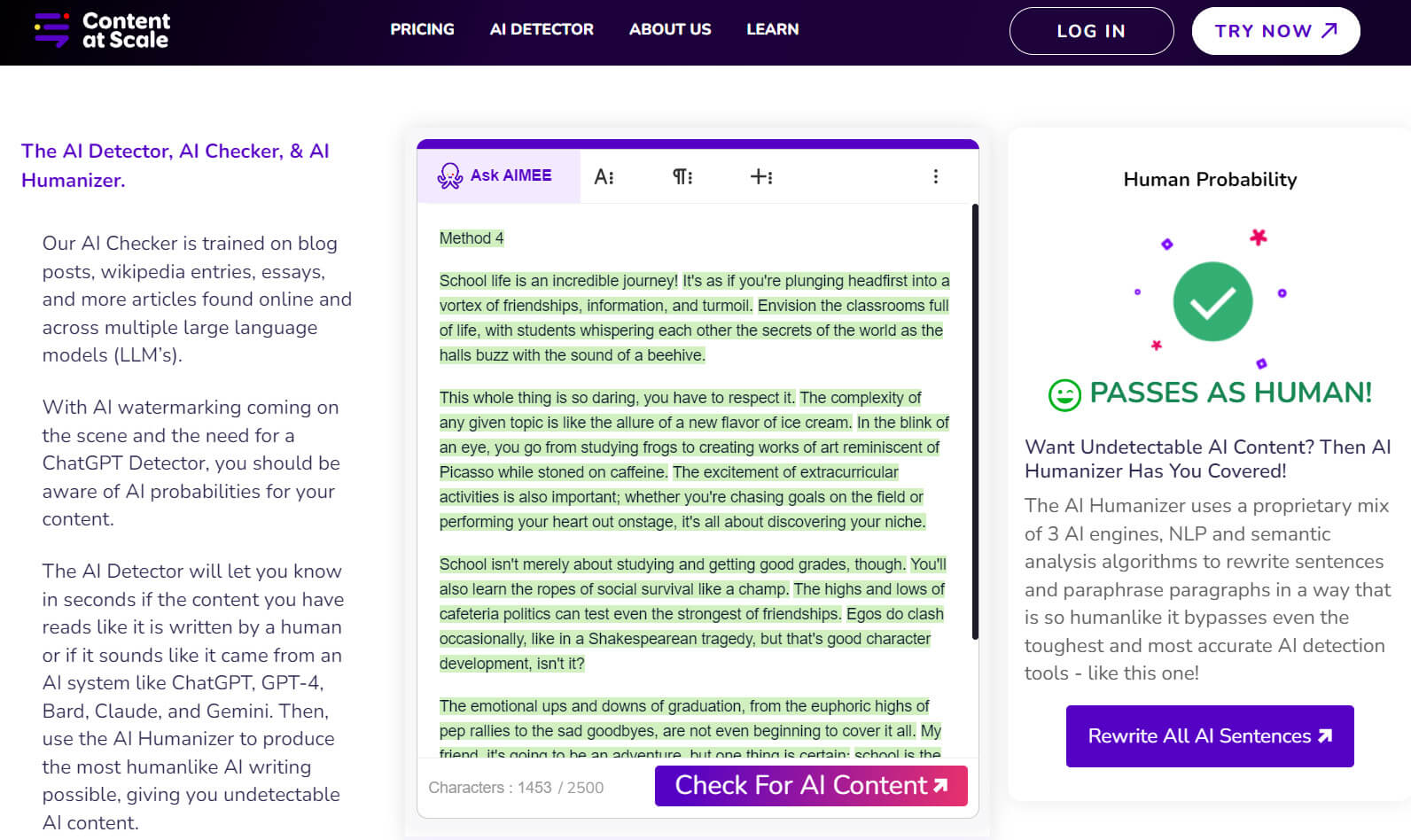
| AI Detectors | AI Detection Results - After | AI Detection Results - Baseline |
| Originality.ai | 0% Human, 100% AI | 0% Human, 100% AI |
| GPTZero | 29% Human, 3% Mixed, 68% AI | 1% Human, 2% Mixed, 98% AI |
| Content at Scale | Passes as Human | Reads like AI |
Based on the results, I think it’s clear that Originality.ai is not one to mess about! But with GPTZero and Content at Scale, it seems the new adjustment did help to blur the lines.
#5. Ask ChatGPT to Revise the Text
In the last test, I showed you how ChatGPT can help in humanizing AI text. I would also recommend using specific instructions that indicate how you want the AI text modified.
For example, look at the instructions I gave ChatGPT this time around:
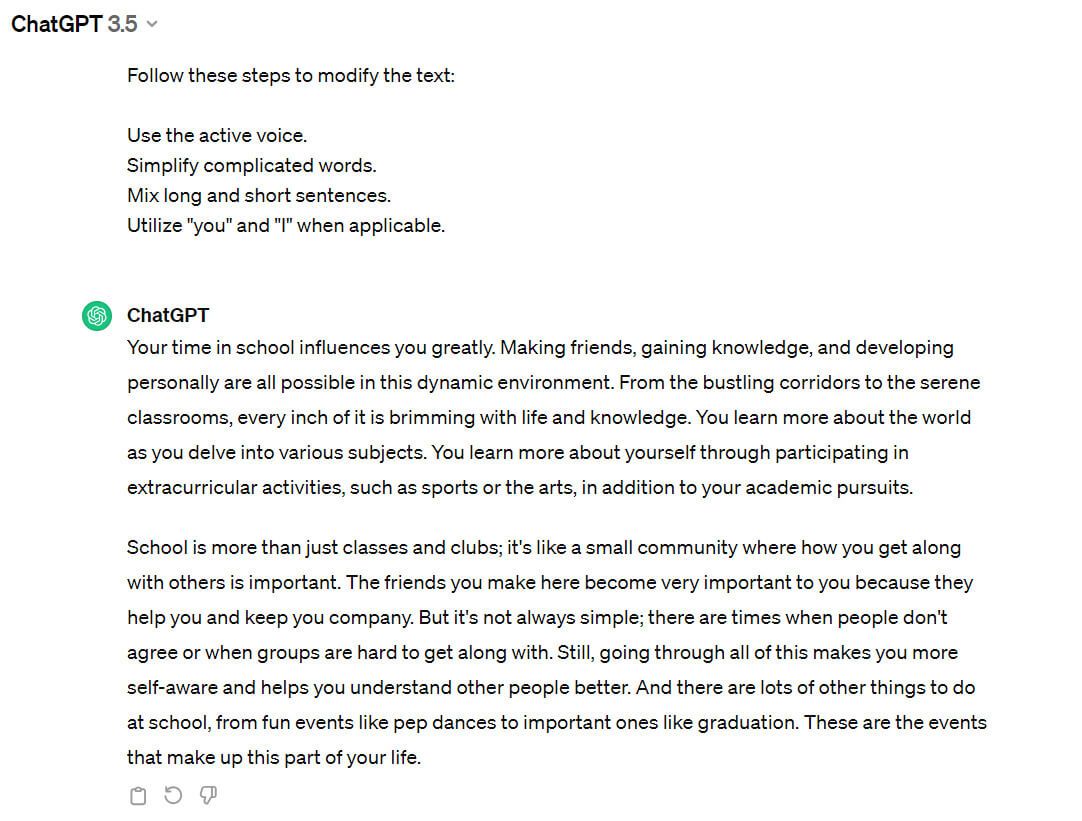
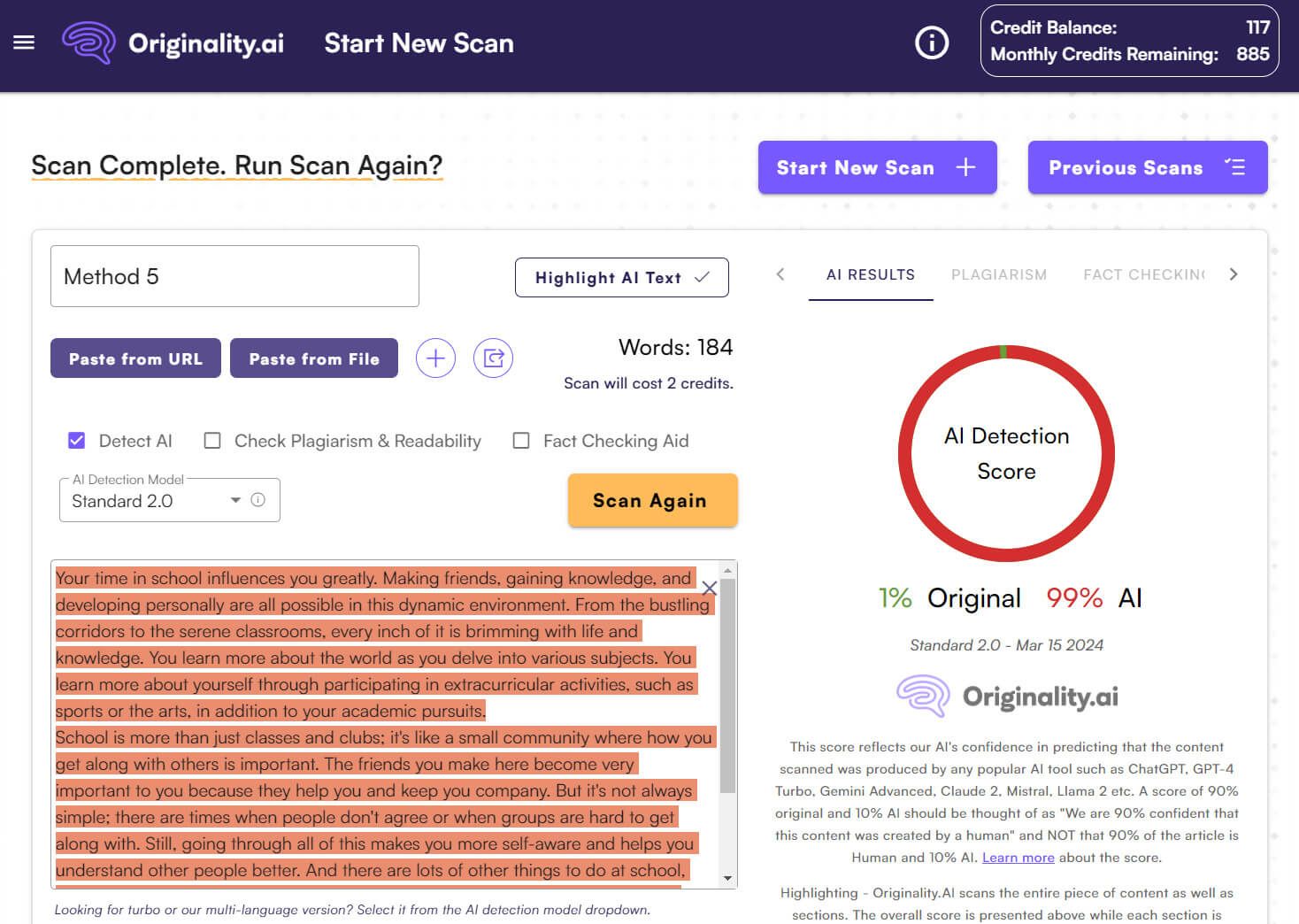
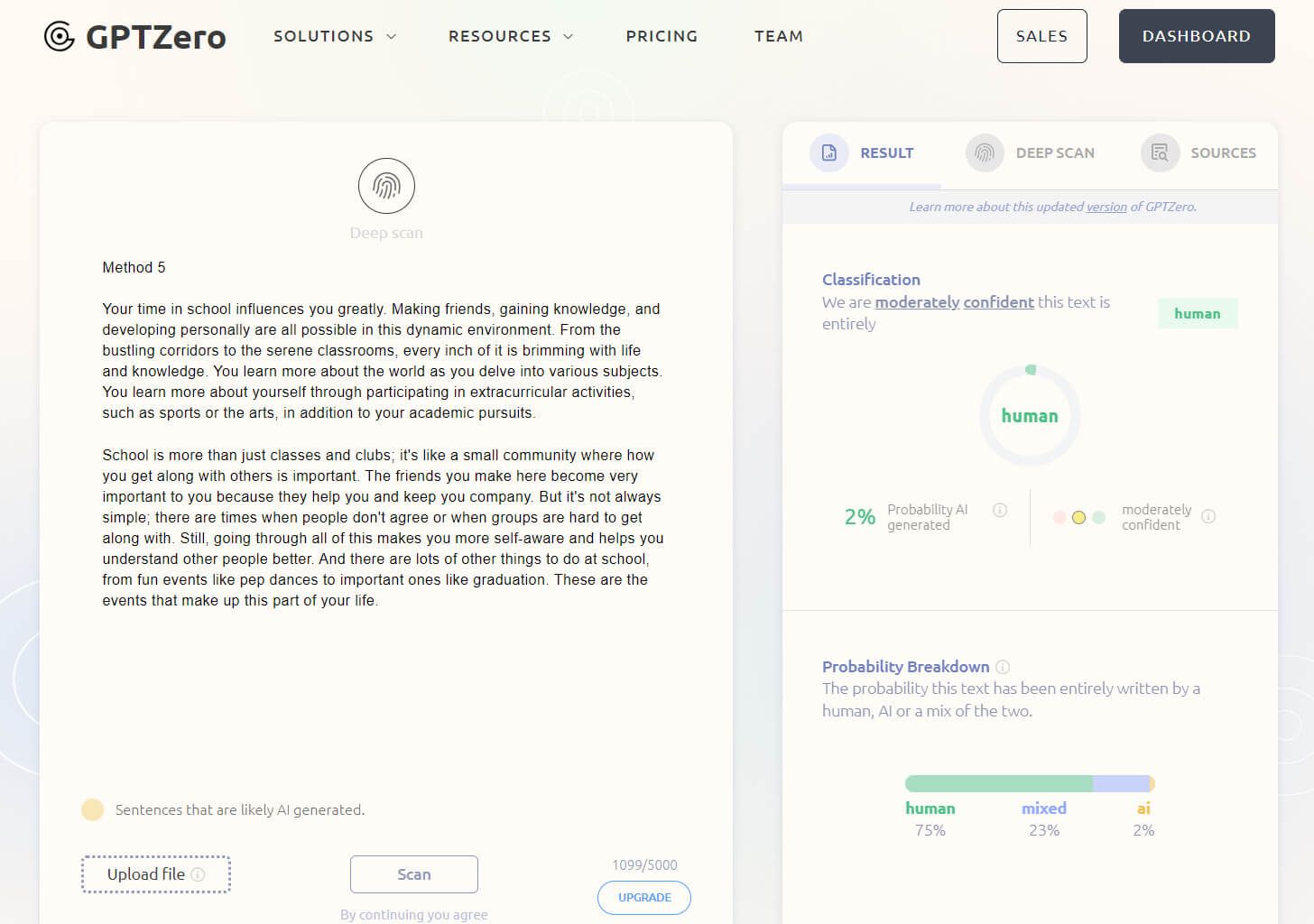
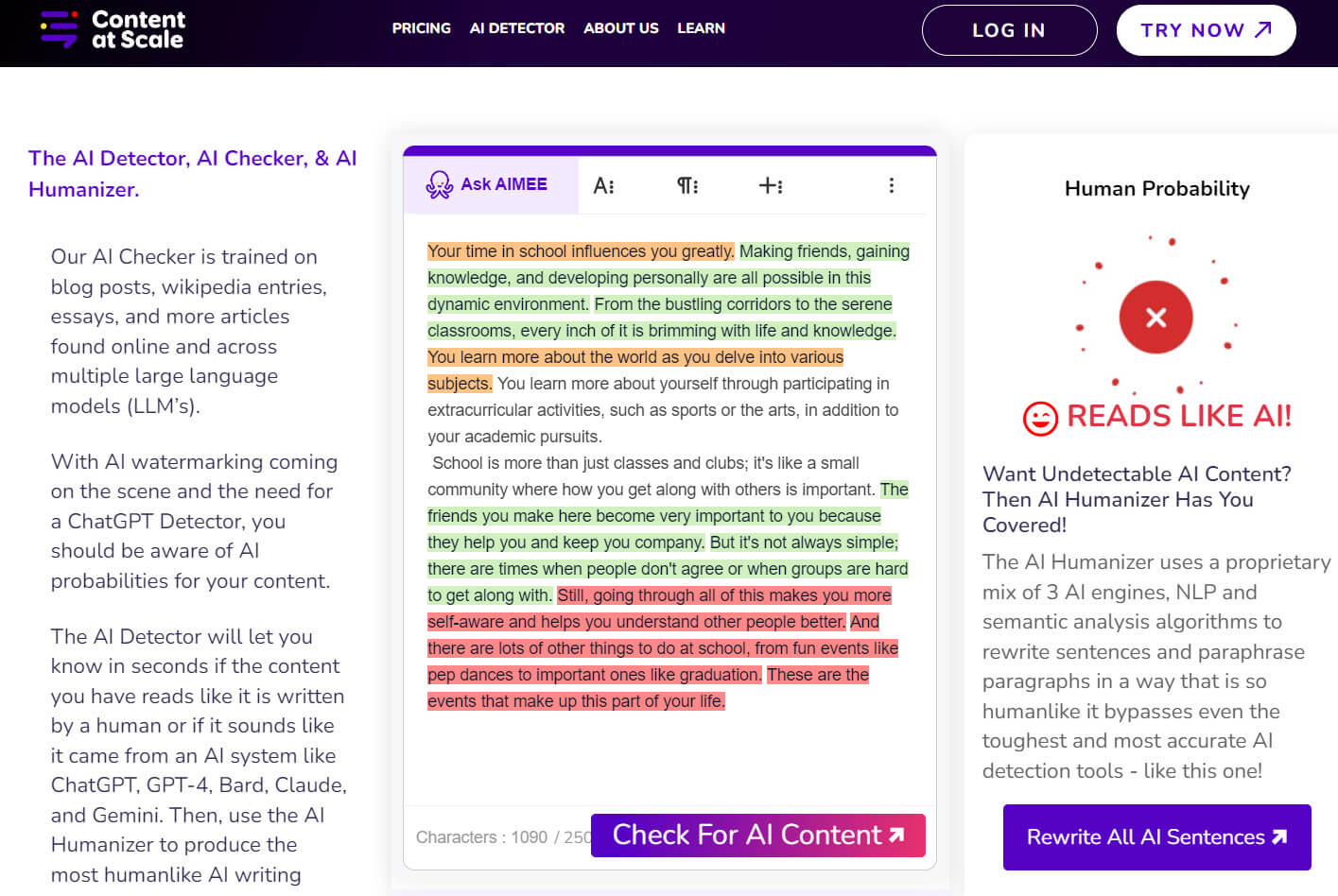
| AI Detectors | AI Detection Results - After | AI Detection Results - Baseline |
| Originality.ai | 1% Human, 99% AI | 0% Human, 100% AI |
| GPTZero | 75% Human, 23% Mixed, 2% AI | 1% Human, 2% Mixed, 98% AI |
| Content at Scale | Reads like AI | Reads like AI |
It seems the changes I asked ChatGPT to make weren’t enough to deter Originality.ai or Content at Scale. But they did seem to make a huge impression on GPTZero!
#6. Be Precise with Your Prompts
An AI humanization technique that I have often heard about is to tweak AI prompts by providing additional context and details on how you want the content written.
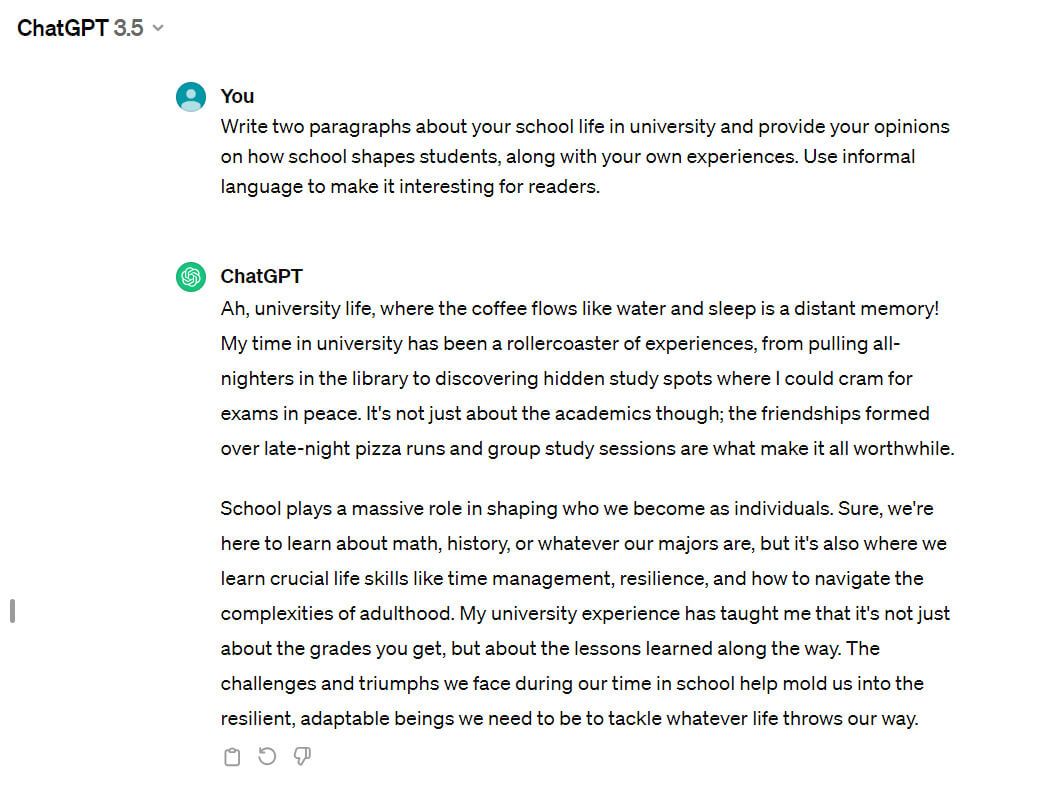
In this sample case, I requested ChatGPT to generate two paragraphs about school life but I adjusted my prompt this time:
[Write two paragraphs about your school life in university and provide your opinions on how school shapes students, along with your own experiences. Use informal language to make it interesting for readers]
You can see what ChatGPT generated below:
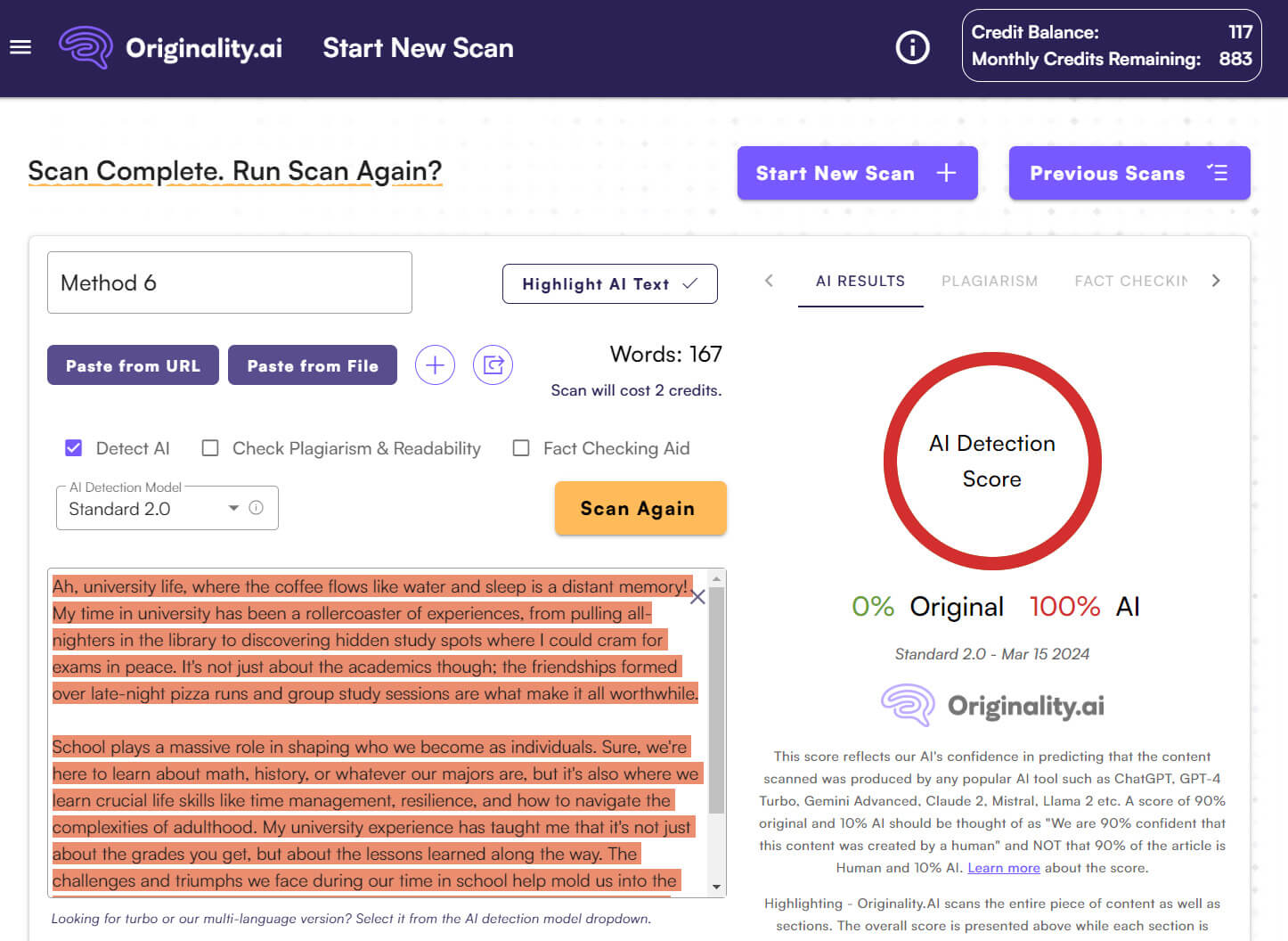
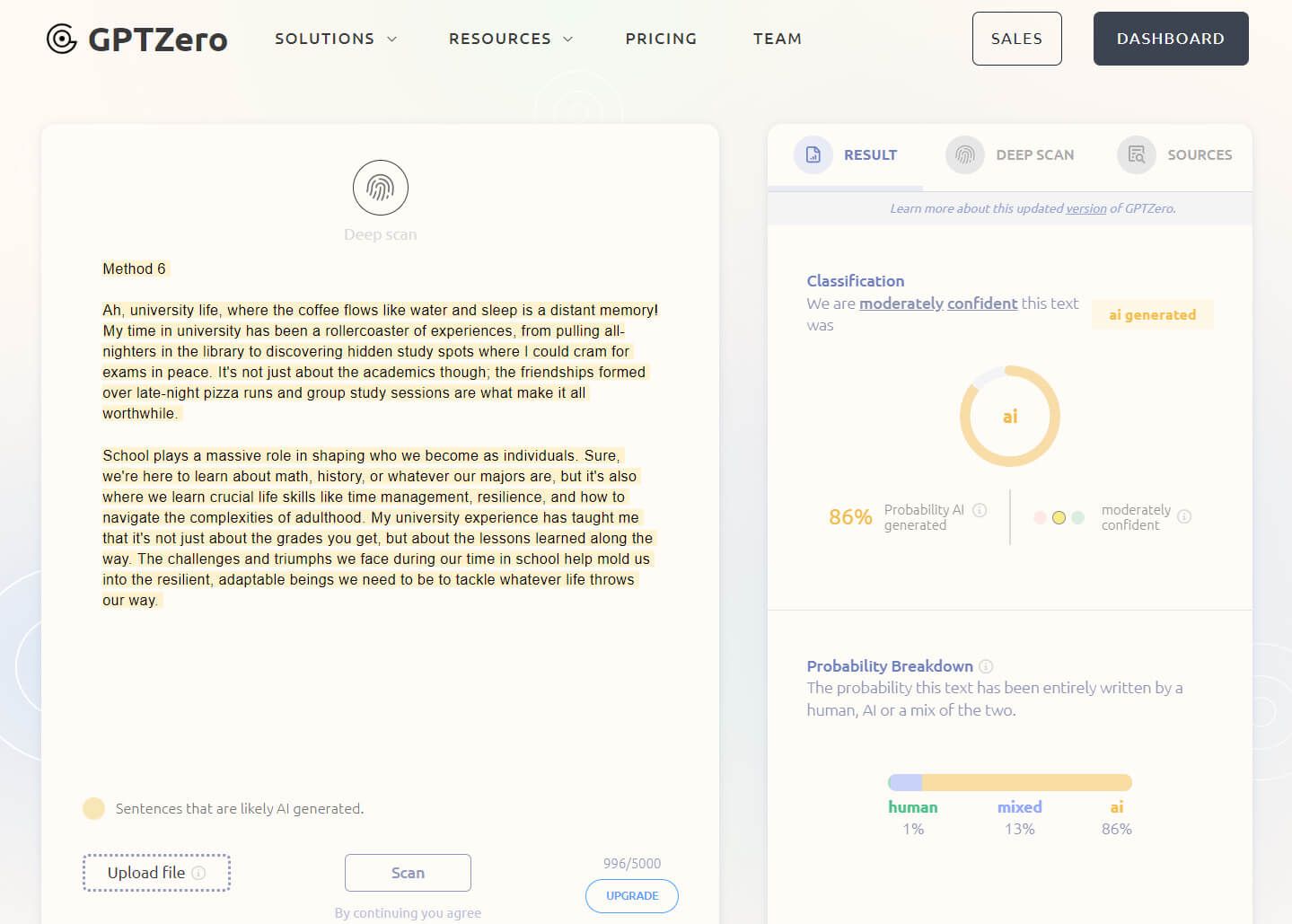
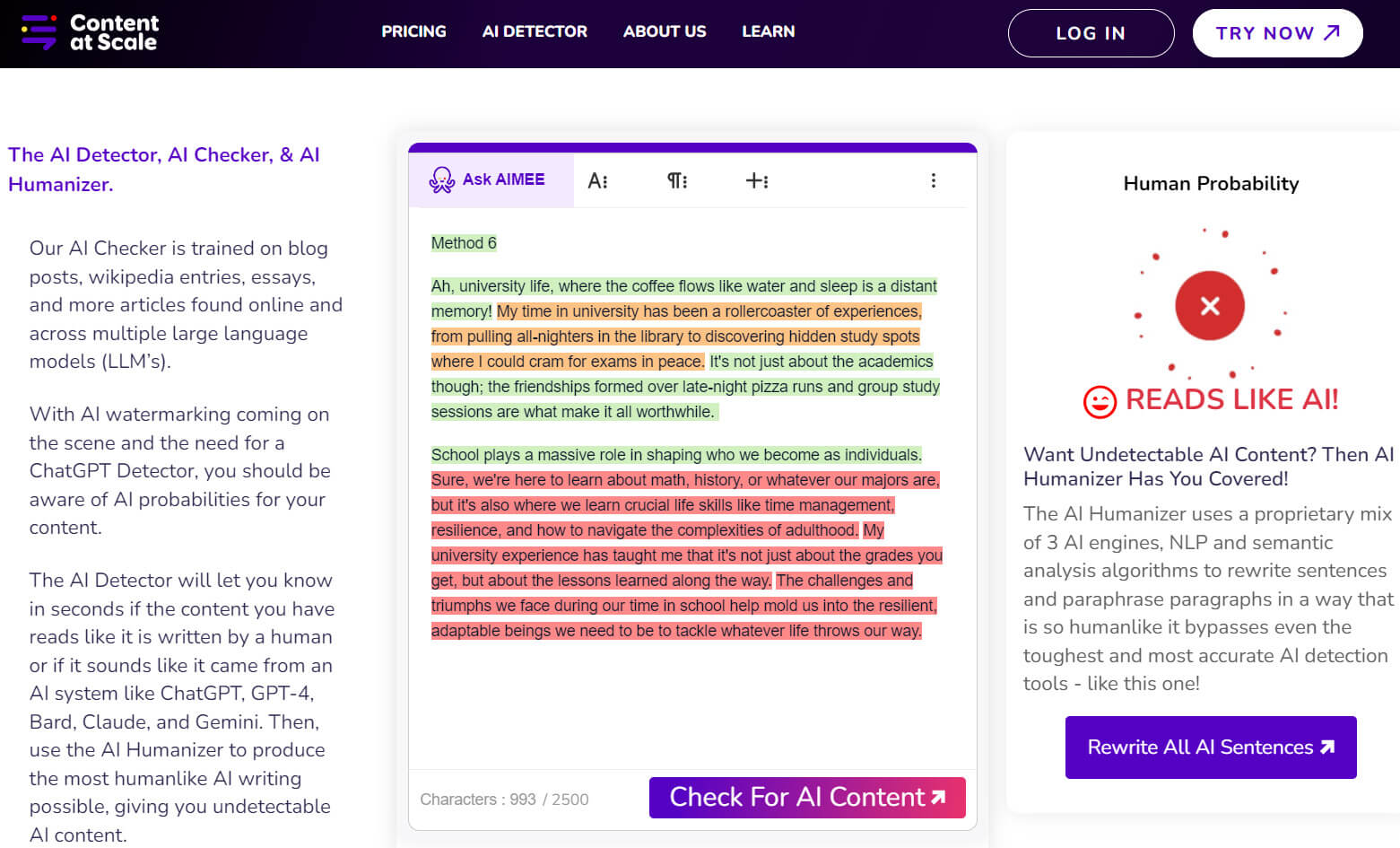
Want to see how this strategy panned out? See what the AI detectors had to say:
| AI Detectors | AI Detection Results - After | AI Detection Results - Baseline |
| Originality.ai | 0% Human, 100% AI | 0% Human, 100% AI |
| GPTZero | 1% Human, 13% Mixed, 86% AI | 1% Human, 2% Mixed, 98% AI |
| Content at Scale | Reads like AI | Reads like AI |
I was a little disappointed since it only led to a 98% to 86% change in GPTZero’s results. I think that for this method to work, further adjustments and experimentation will be needed.
#7. Eliminate Repetitive Wording
Having worked with AI content, I can attest to seeing how AI writers tend to overuse redundant phrases, unnecessarily complex terms, and even pointless clichés.
These can be quite easy for AI detectors to spot, and there is even a Reddit thread where users have compiled lists of common words frequently used by ChatGPT.
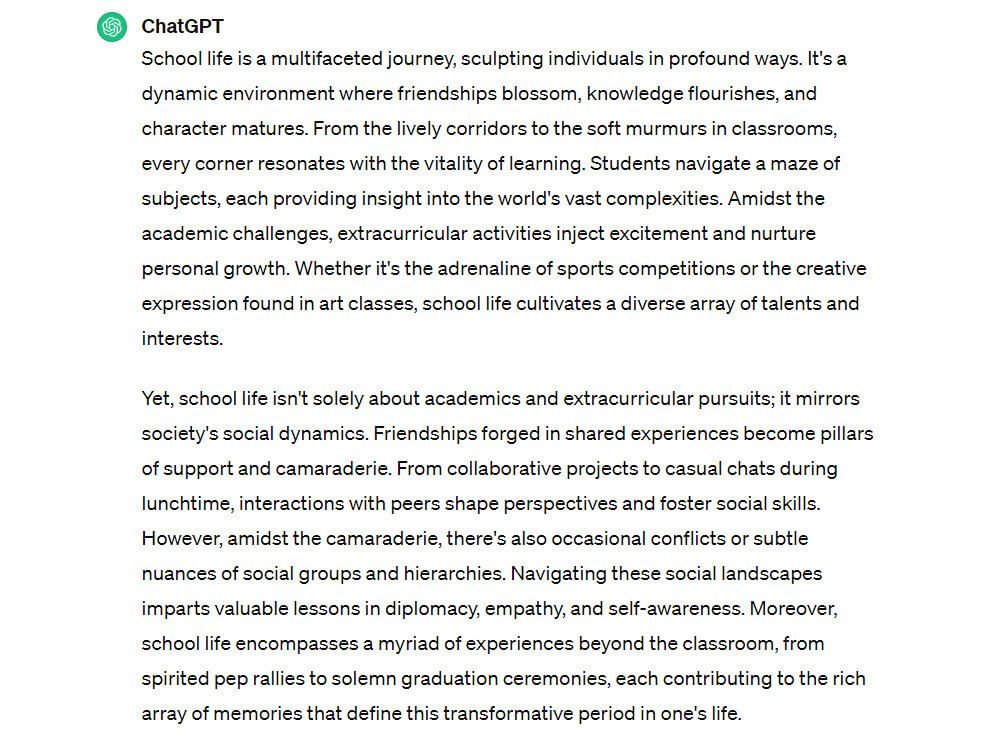
To see how the AI detectors would react if they were omitted, I requested ChatGPT to remove them from the original AI content. Here’s what ChatGPT produced in response:
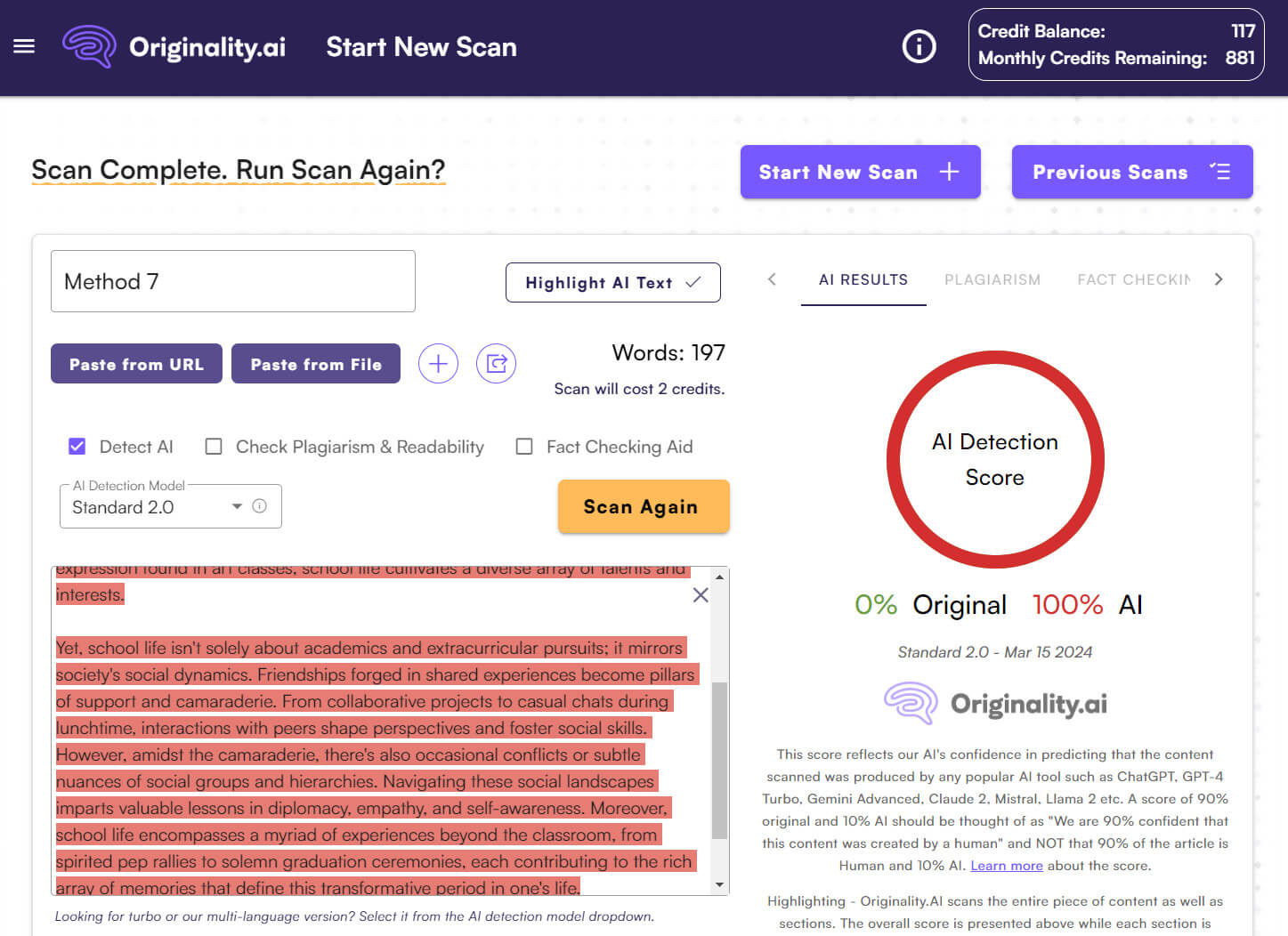
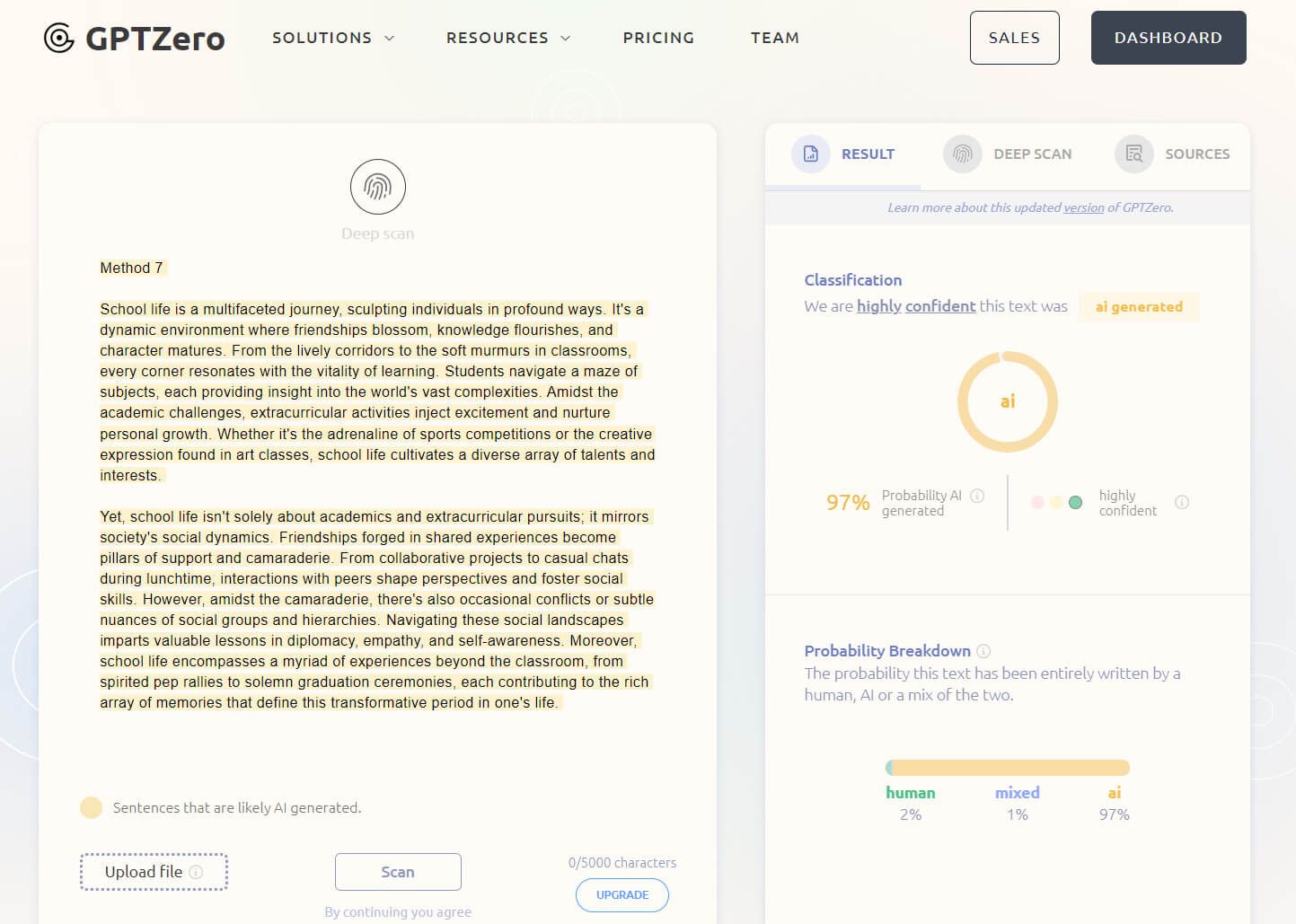
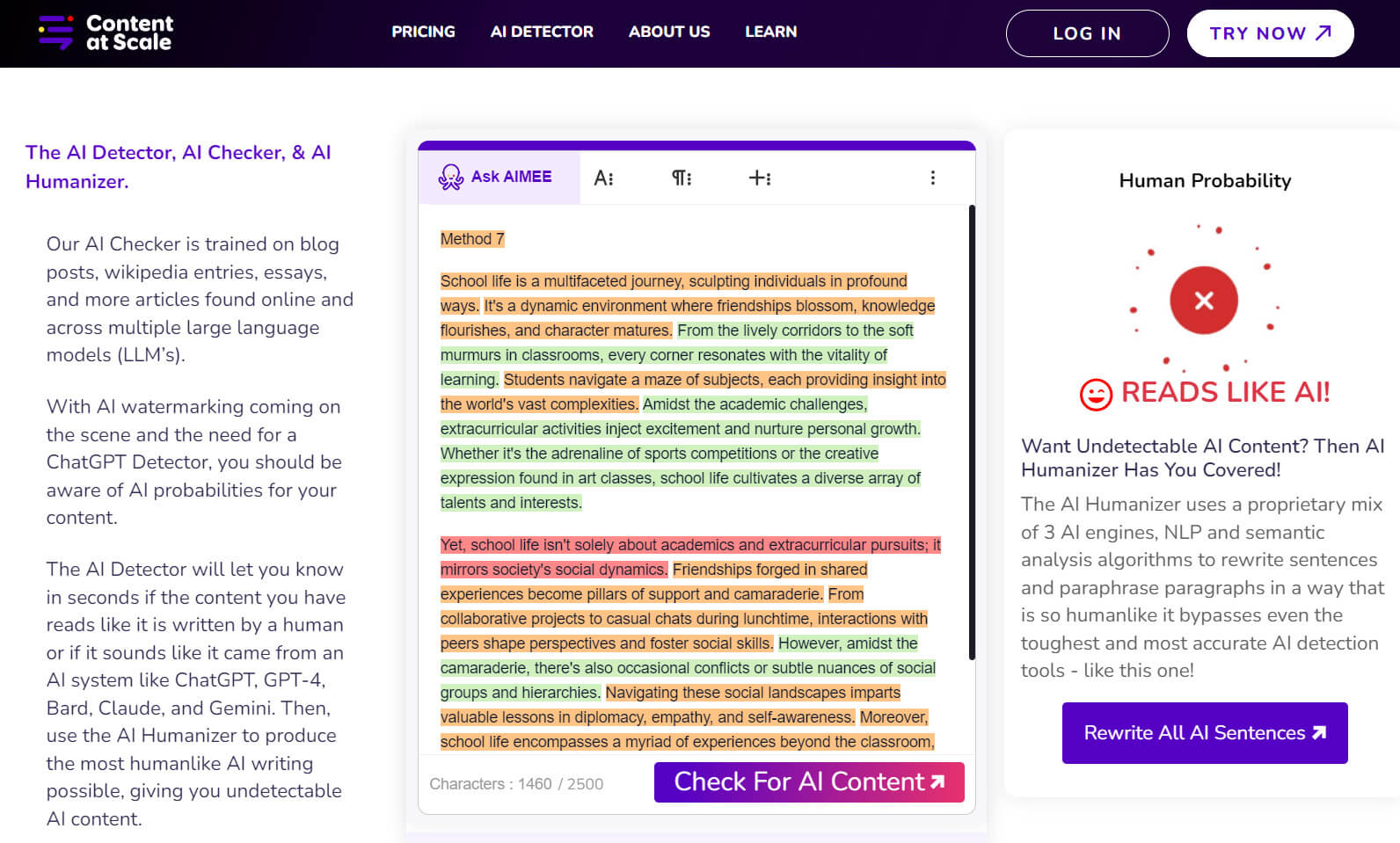
I immediately scanned this new version, and here are its AI scores below:
| AI Detectors | AI Detection Results - After | AI Detection Results - Baseline |
| Originality.ai | 0% Human, 100% AI | 0% Human, 100% AI |
| GPTZero | 2% Human, 1% Mixed, 97% AI | 1% Human, 2% Mixed, 98% AI |
| Content at Scale | Reads like AI | Reads like AI |
I think it’s safe to say that this test was a bit of a dud. It seems even with the omission of these terms, there was almost no impact except on GPTZero.
#8. Keep the Writing Simple
I have often found AI-generated content to be hard to read at times. Don’t you think? I mean, AI writers often like to over-explain and even complicate topics unnecessarily.
Many AI detectors are trained to spot such lengthy and fluffy AI texts a mile away. So, what would happen if we tried to simplify the language a bit?
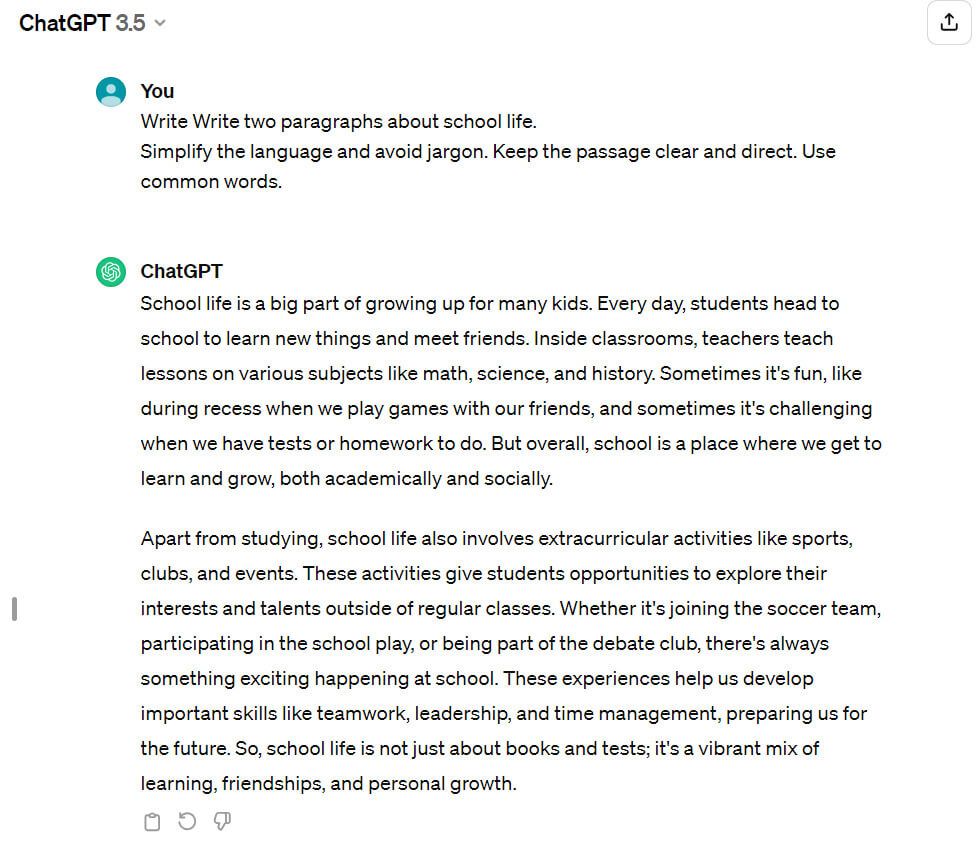
To try out this method, I asked ChatGPT to: "Simplify the language and avoid jargon. Keep the passage clear and direct. Use common words."
This was what ChatGPT produced below:
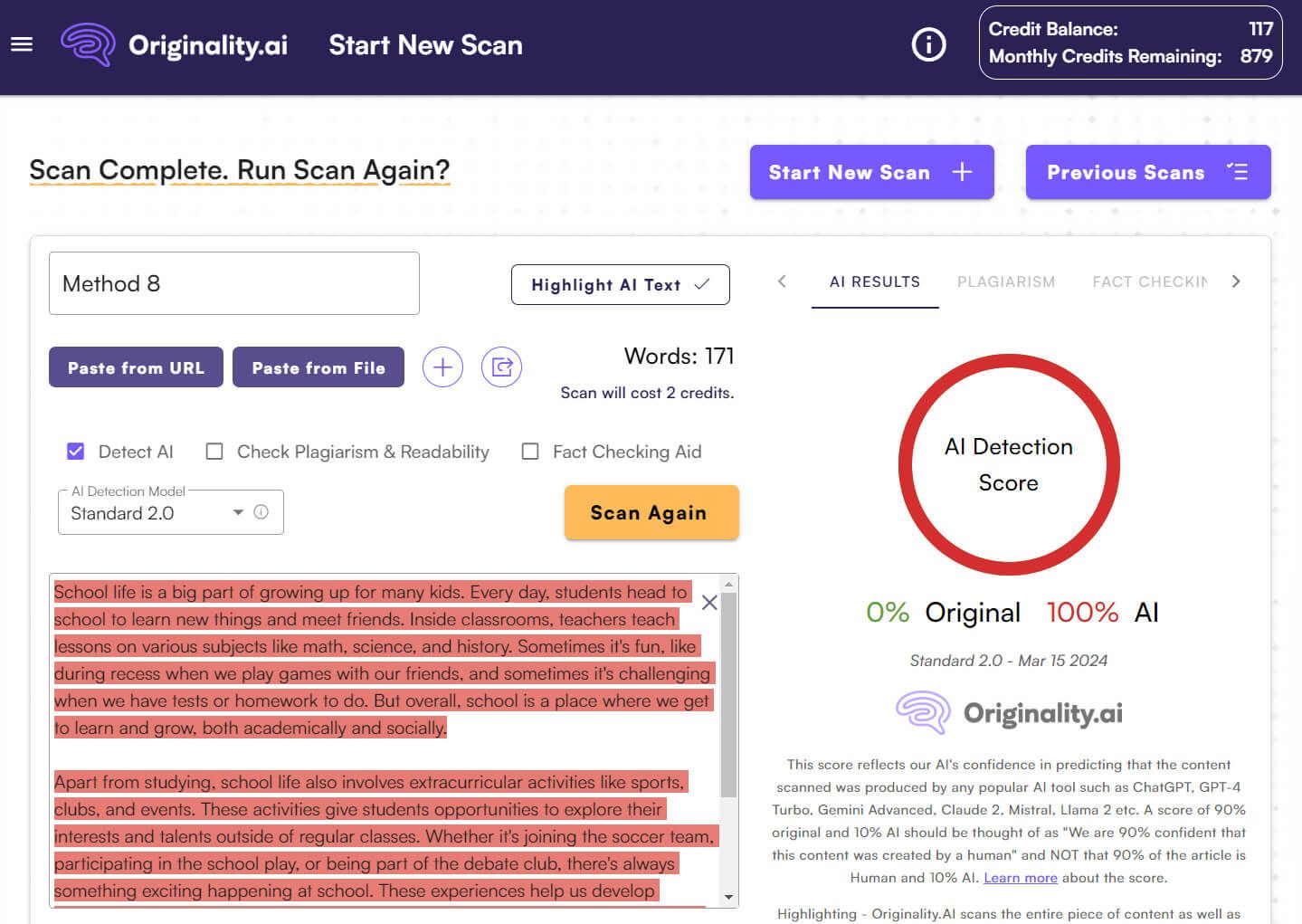
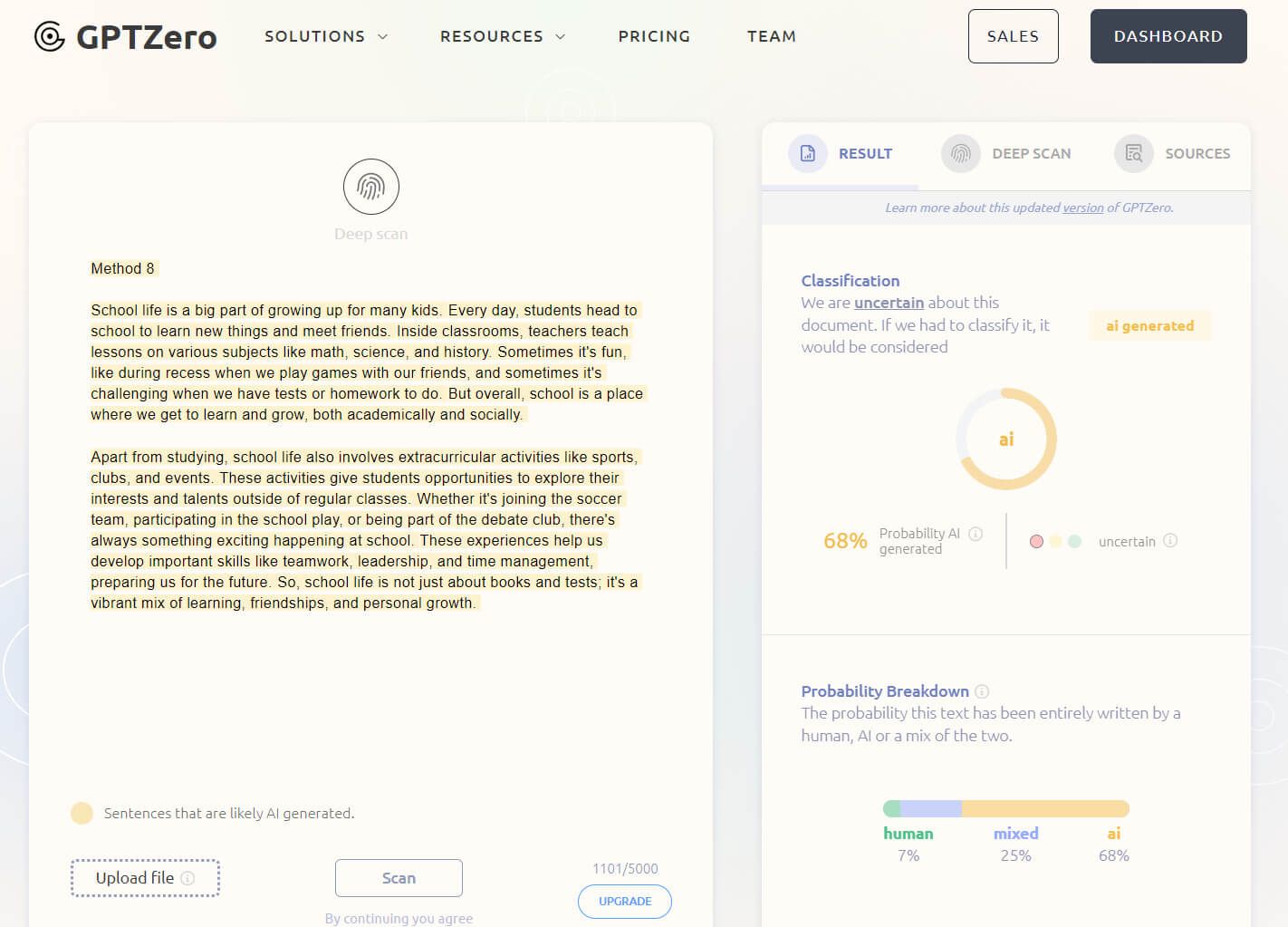
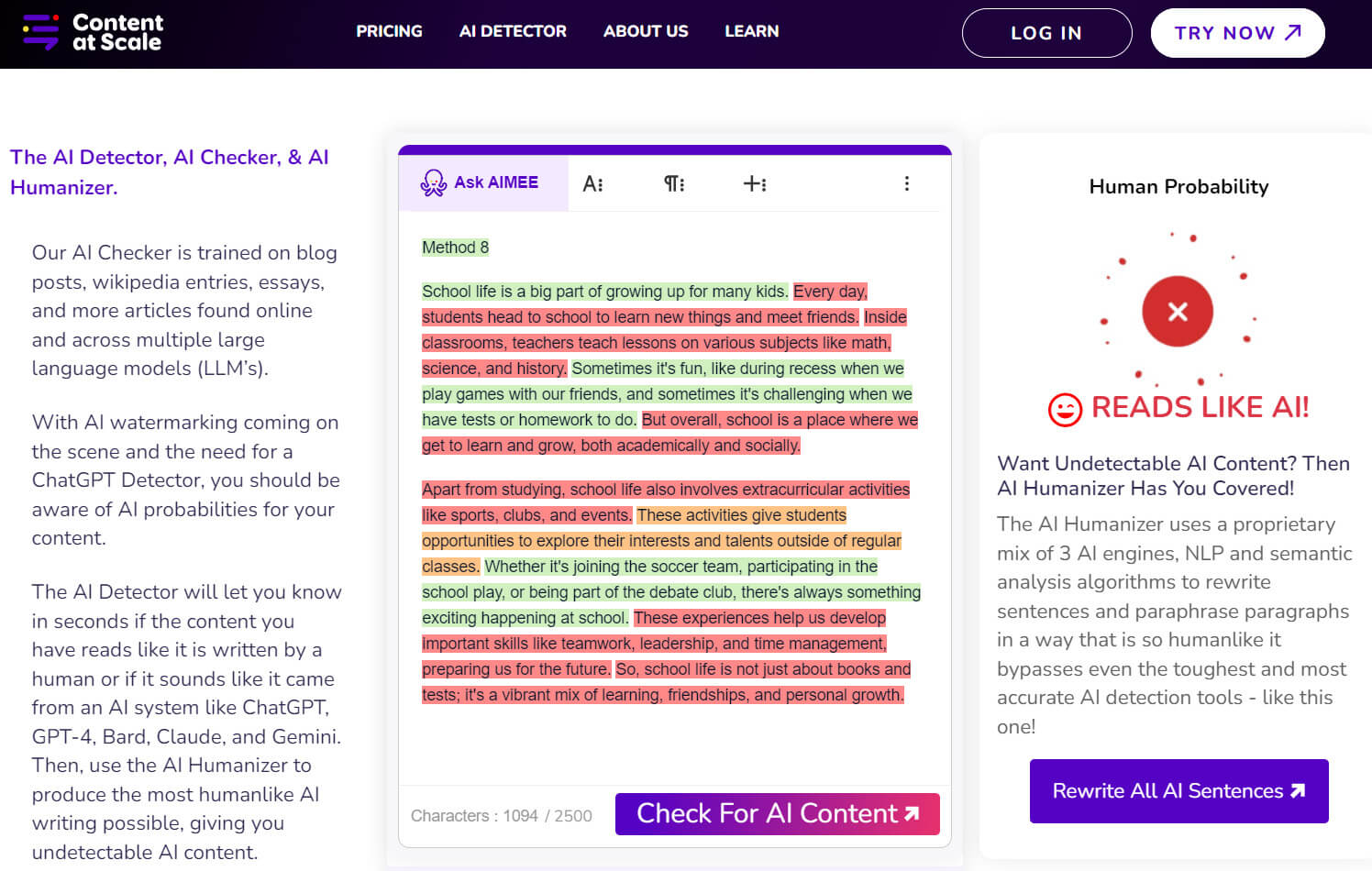
Let’s see how these changes impacted the AI detection scores here:
| AI Detectors | AI Detection Results - After | AI Detection Results - Baseline |
| Originality.ai | 0% Human, 100% AI | 0% Human, 100% AI |
| GPTZero | 7% Human, 25% Mixed, 68% AI | 1% Human, 2% Mixed, 98% AI |
| Content at Scale | Reads like AI | Reads like AI |
It looks like GPTZero only slightly improved. Otherwise, simplifying the language was not enough for the other two AI detectors to merit change.
#9. Vary the Sentence Structures
Another commonly suggested strategy is using varied sentence structures. Since AI content tends to follow a uniform pattern of writing, it helps to add some rhythm.
I would say this means using short, punchy sentences to help create impact and maintaining longer ones for compelling narratives.
Basically, you just need to try and mix it up because this will mimic the natural flow of real human writing. I often find that it can also help with improving readability.
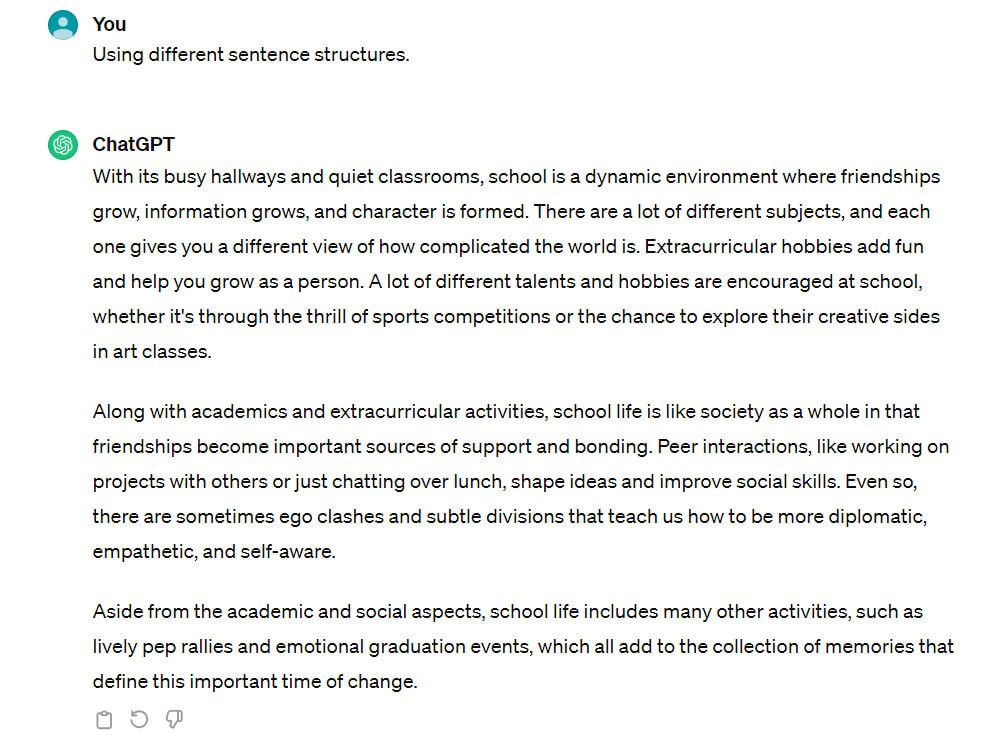
But does it actually work against AI detectors? To find out, I asked ChatGPT to rewrite the AI content and implement different sentence structures.
This is the new content version it produced:
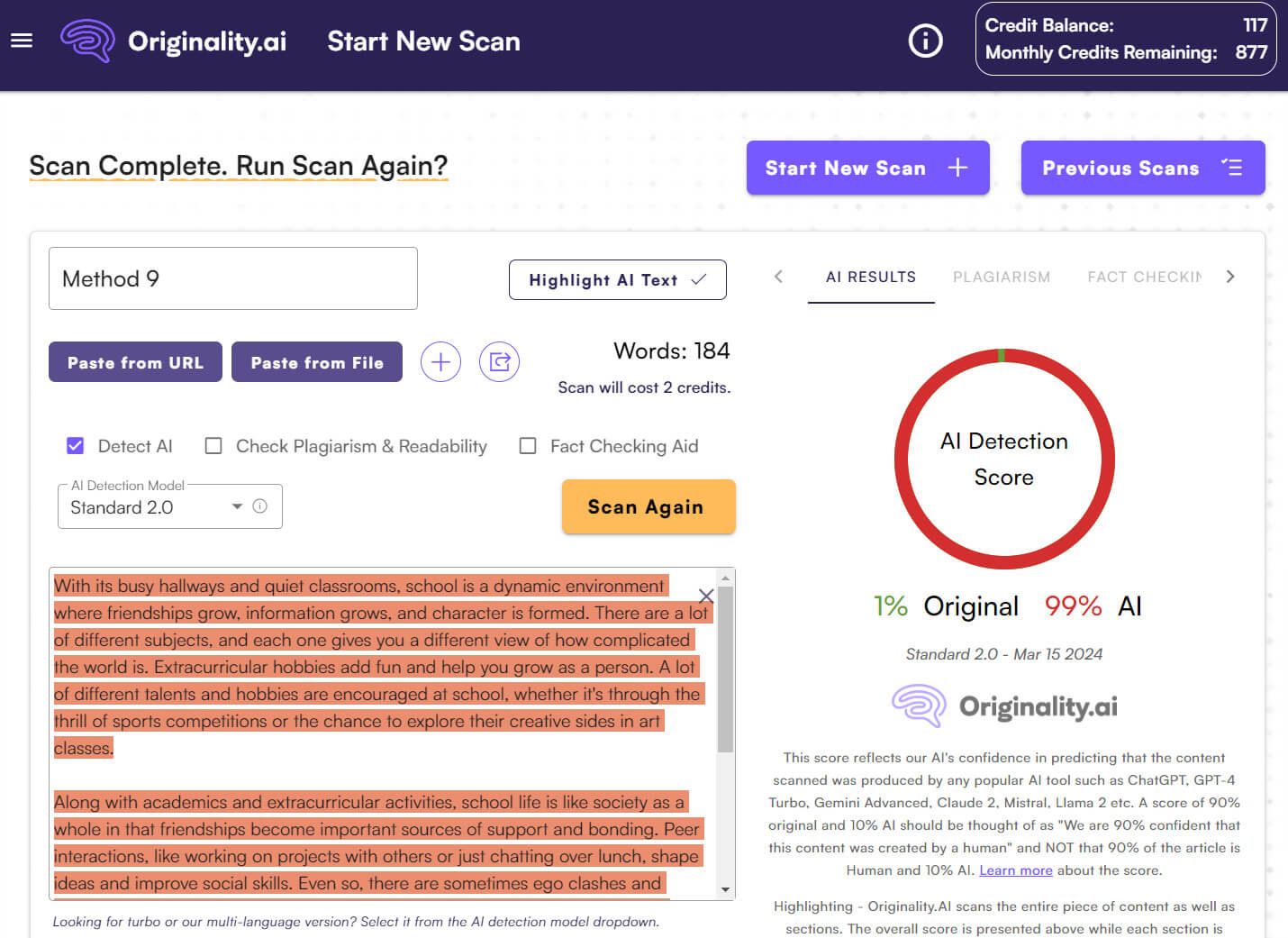
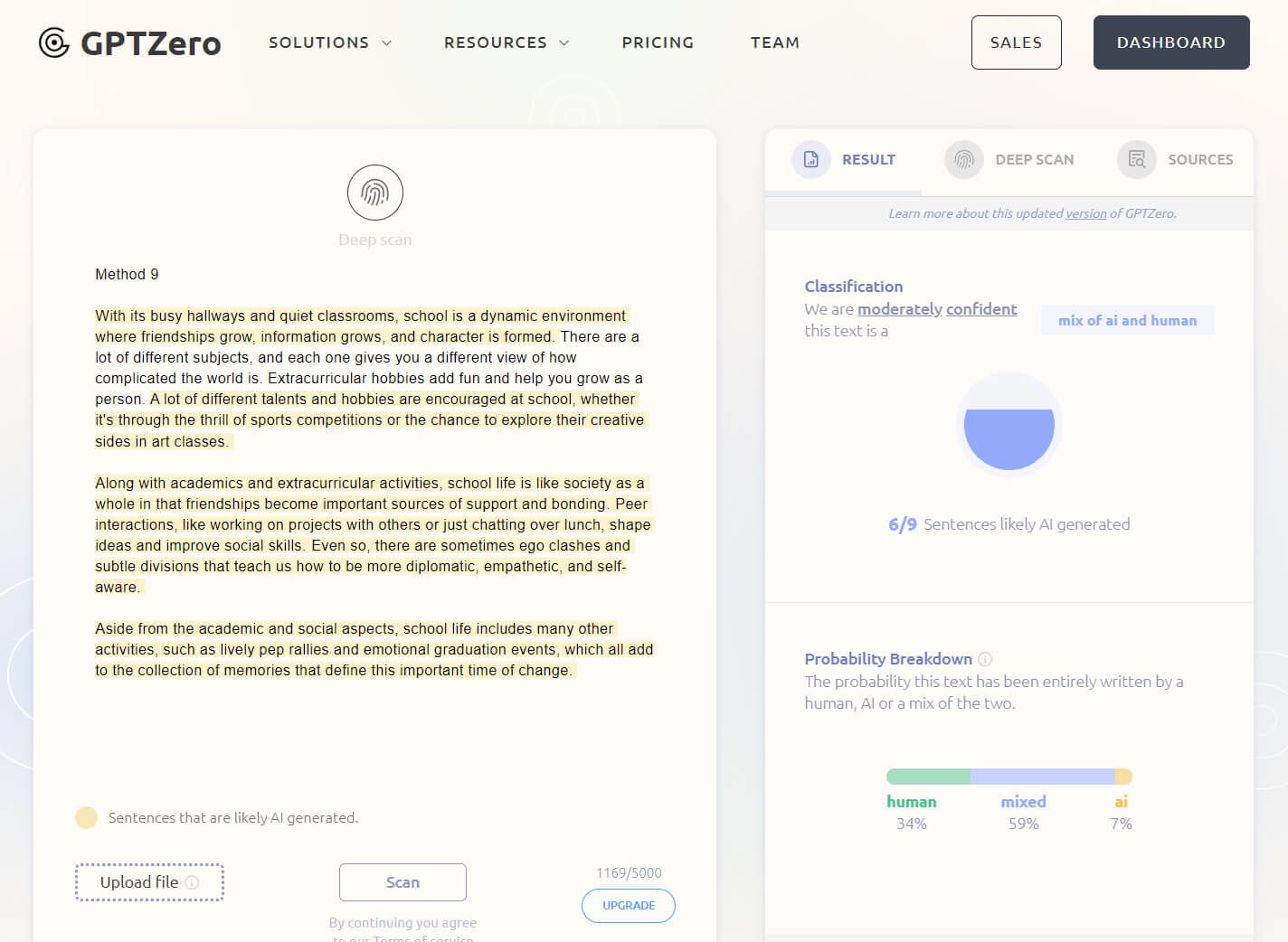
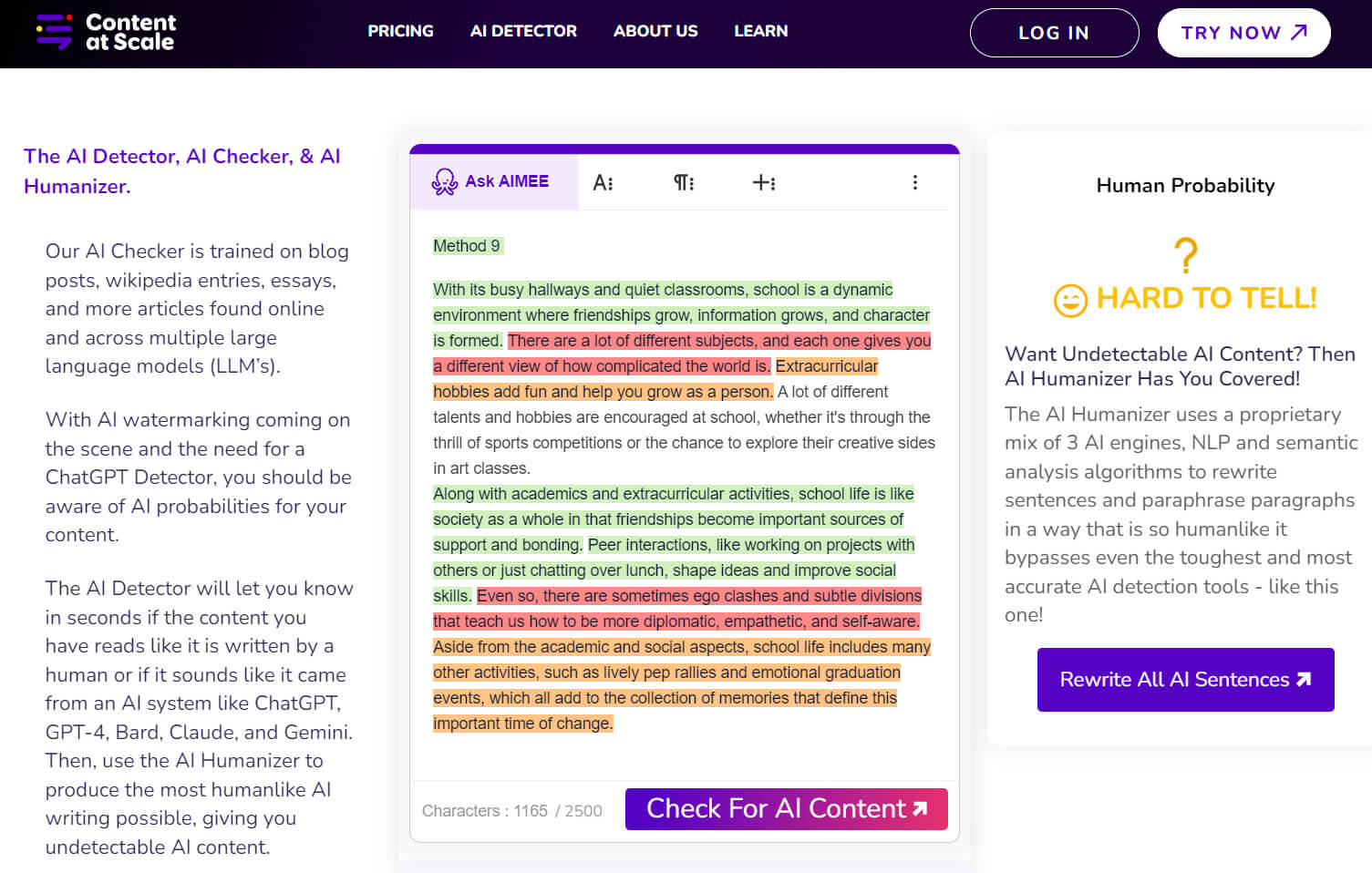
I then scanned the new text for signs of AI and these were the final results:
| AI Detectors | AI Detection Results - After | AI Detection Results - Baseline |
| Originality.ai | 1% Human, 99% AI | 0% Human, 100% AI |
| GPTZero | 34% Human, 59% Mixed, 7% AI | 1% Human, 2% Mixed, 98% AI |
| Content at Scale | Hard to Tell | Reads like AI |
Once again, the results were mixed. The new changes made a fair impact on GPTZero’s scores, but it seems that the other two AI detectors were not really convinced.
#10. Add Intentional Mistakes
AI writers are trained to generate content with no grammatical, vocabulary, or syntax errors. But I’m sure we can all agree that human writers are not that perfect.
We often make the occasional spelling, phrasing, or even sentence errors, every now and then. So, this method involves introducing those mistakes in the text intentionally.
Honestly, I wouldn’t typically recommend this approach. After all, it can ruin content coherence, which makes it harder for readers to understand what you are saying.
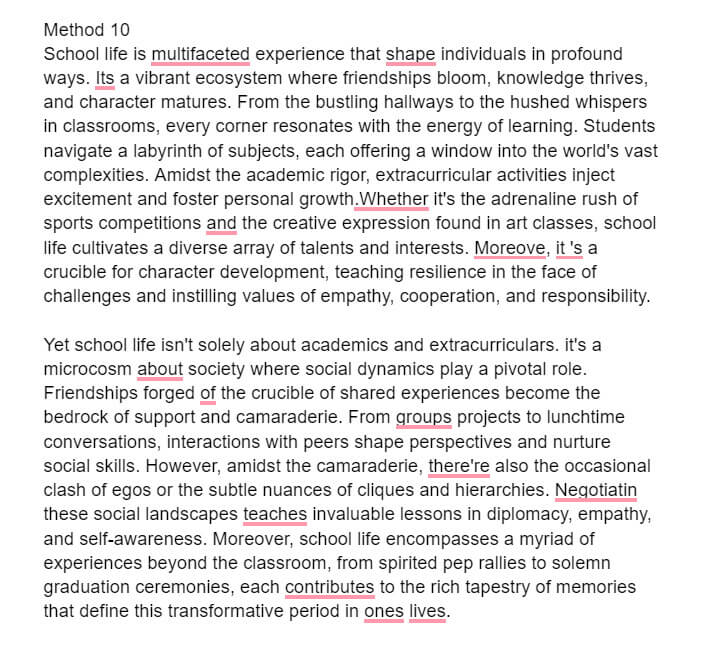
However, I did want to see if it would make a difference. So, I edited the AI content by throwing in a few errors into the mix as you can see below:
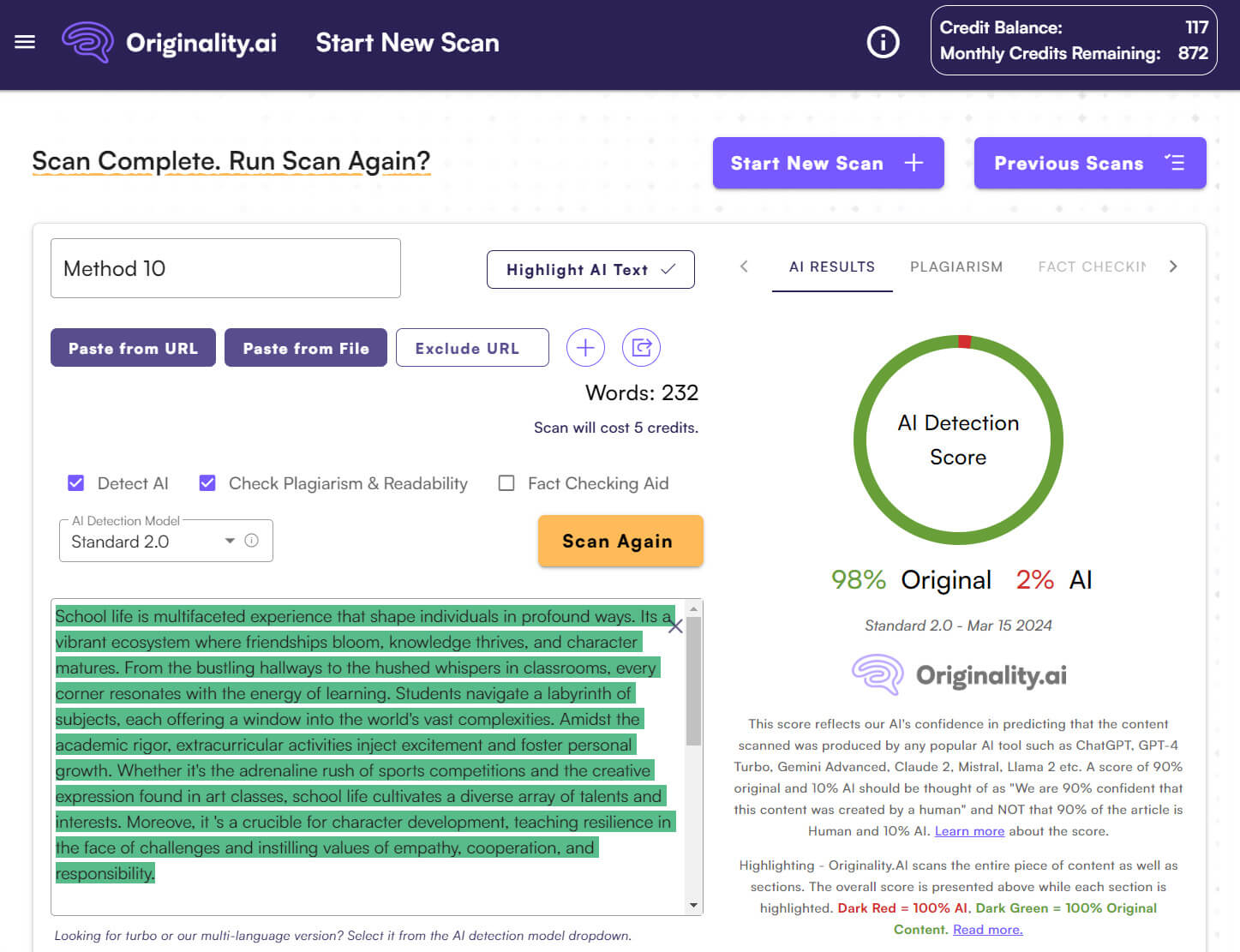
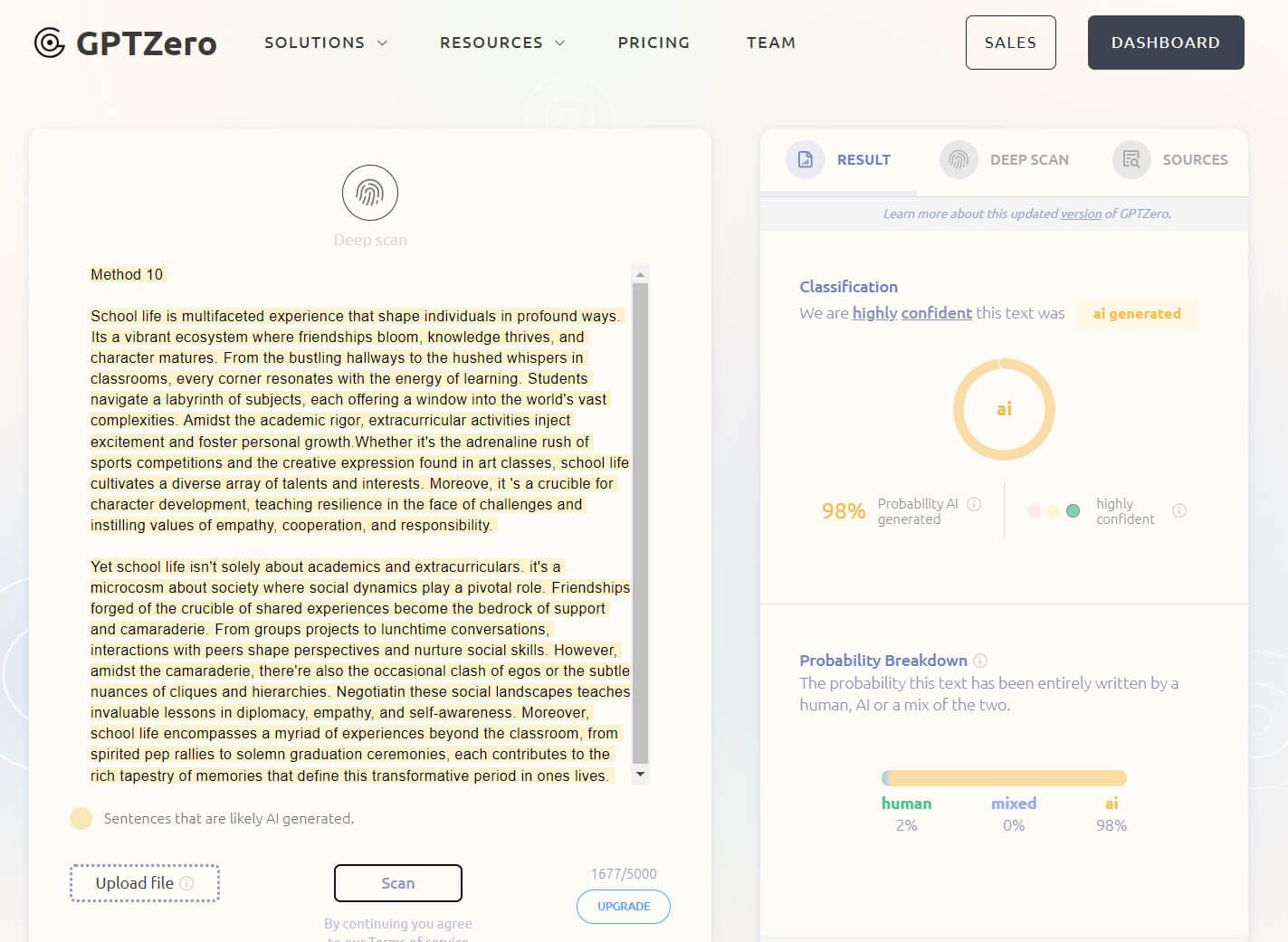
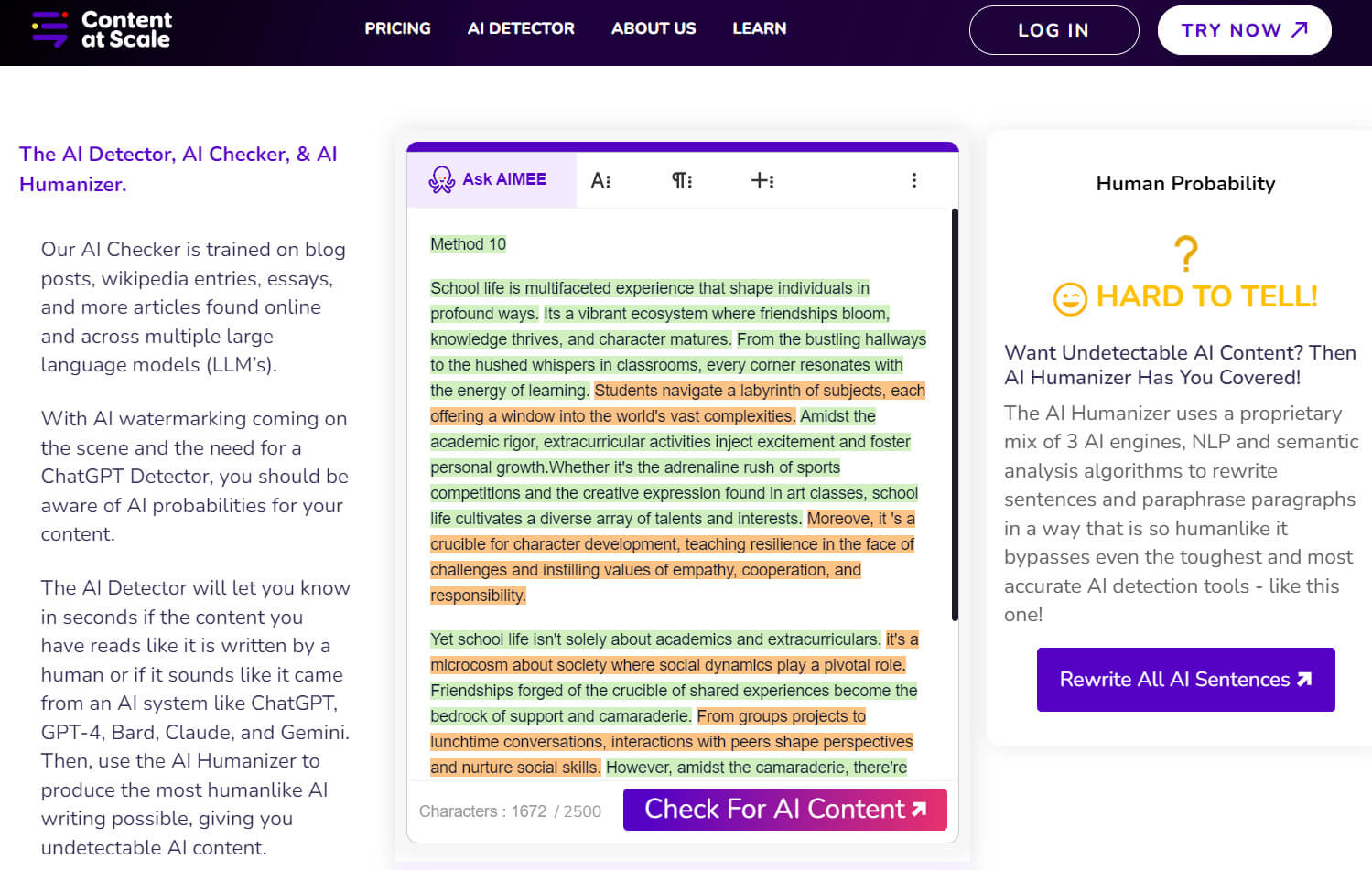
This is what the AI detectors had to say about this strategy:
| AI Detectors | AI Detection Results - After | AI Detection Results - Baseline |
| Originality.ai | 98% Human, 2% AI | 0% Human, 100% AI |
| GPTZero | 2% Human, 0% Mixed, 98% AI | 1% Human, 2% Mixed, 98% AI |
| Content at Scale | Hard to Tell | Reads like AI |
It seems that adding mistakes works well on Originality.ai. But the other two AI detectors were not fazed. Plus, the content isn't very readable, so I still wouldn’t advise this method.
How Do AI Detectors Function?
I’ve always been fascinated by how AI detectors pick out AI texts with such ease. I soon discovered that it is because they leverage datasets to conduct statistical text analysis.
If I were to put it simply, AI detectors are trained to analyze content and identify certain patterns in the text that are typical of AI-generated content.
These textual patterns revolve around the vocabulary, syntax, paragraph structures, phrasing, and even logic often frequented by AI models like ChatGPT and Bard.
But there’s also a downside to how AI writers like ChatGPT are developed that I must also point out. You see, these tools are usually trained on human-generated data.
This means they tend to generate content with a similar style to the original data samples. So, it is not uncommon for AI detectors to mistakenly flag real human-written text as AI.
Why Humanize Your AI-generated Text?
I find the ability to bypass AI detectors is vital, no matter what industry or niche you are involved in. But many often wonder, is that the only reason to humanize AI text?
I’m here to tell you there are several other reasons why you should make it a priority if you frequently use AI content writers. After all, we all know that AI texts often lack depth.
Without an infusion of human emotion, the content just sounds robotic and uninspiring. This can affect a multitude of things, so let me break down these other reasons in detail.
#1. Preserve SEO Rankings
Ever use AI writers to create articles, web copy, and other marketing content? If so, then I’m here to tell you that you need to humanize the AI text before publishing.
Google has strict content guidelines in place that restrict the type of AI content that can perform well on SERPs.
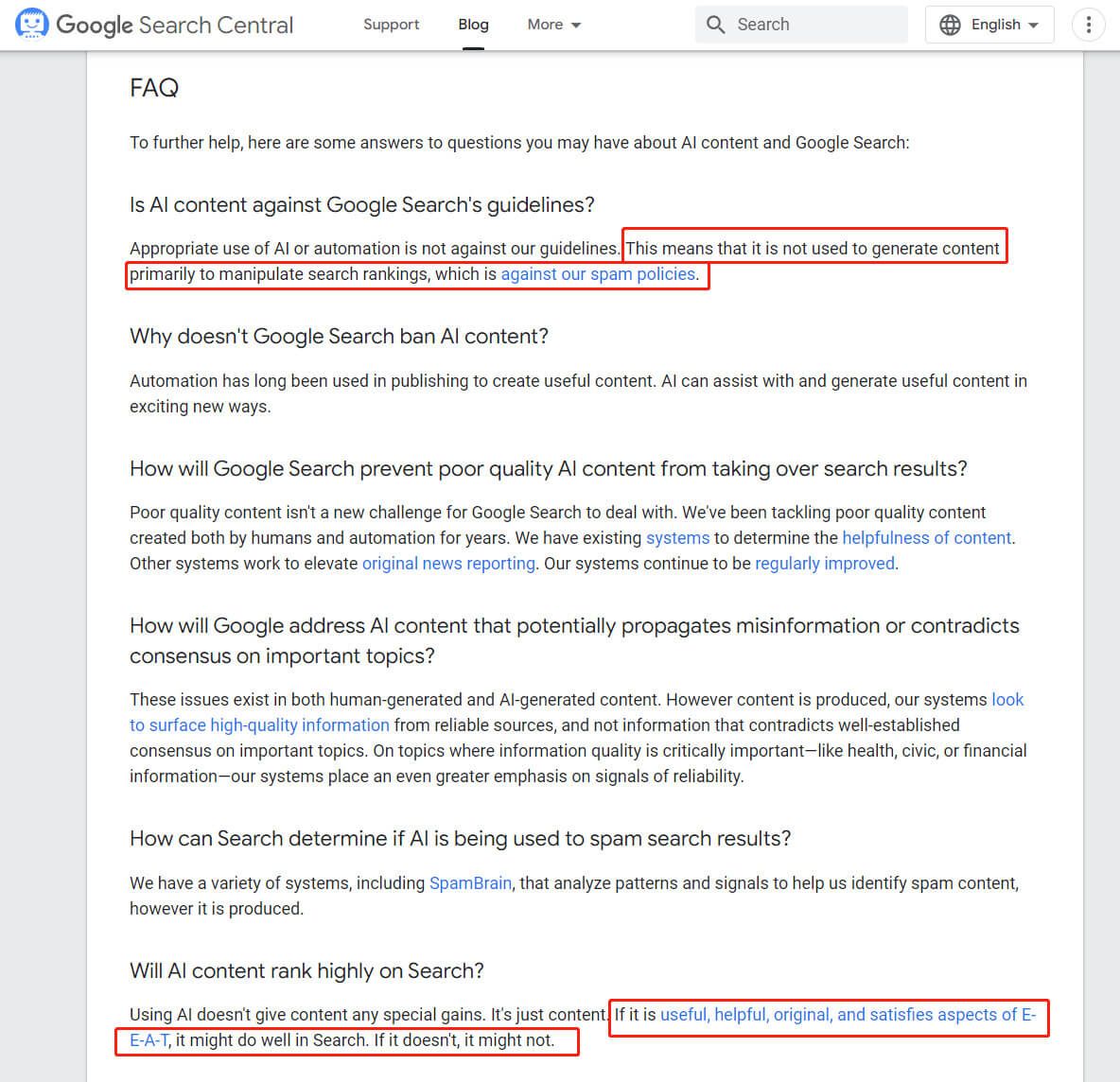
To be specific, Google states that if the published AI content is not unique, useful or coherent, then it will be flagged and penalized.
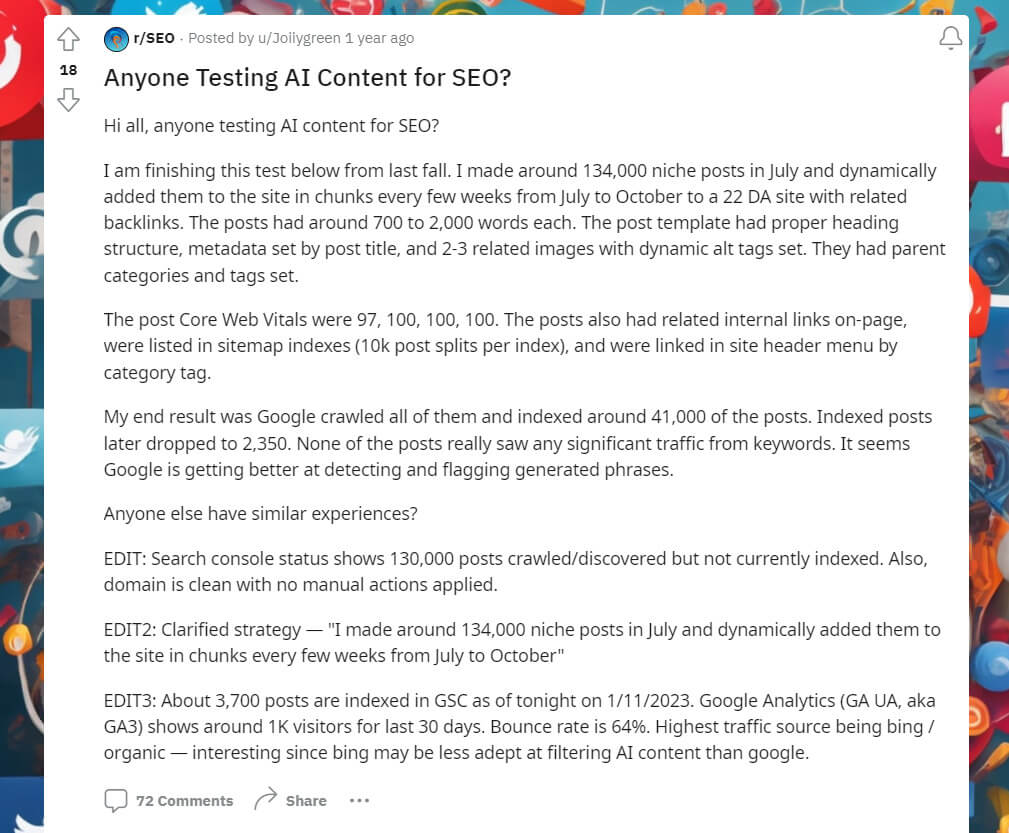
In fact, there was a test conducted by an SEO marketer that showed how several AI posts were unsuccessful in generating significant traffic or engagement.
But even if the AI content is capable of passing Google’s algorithm, some SEO specialists claim that a lack of human input would still make the content ineffective.
In other words, you need to humanize the AI texts if you want to climb up the SEO ranks.
#2. Improve Content Quality
AI writers streamline content creation dramatically, that’s true. But I must say that the downside of these tools is that they fail to resonate with readers.
They generate content that often sounds robotic, distant, and even boring at times. To add to that, I find that they sometimes present inaccuracies, flawed reasoning, etc.
To counter this, it helps to humanize the AI content, which ensures it comes across as genuine, relatable, and authentic to readers for greater engagement.
#3. Protect Your Academic Reputation
I can’t over-emphasize how using AI writers is still a touchy subject in the academic world. In fact, the number of online discussions I have seen about it among students is nuts!
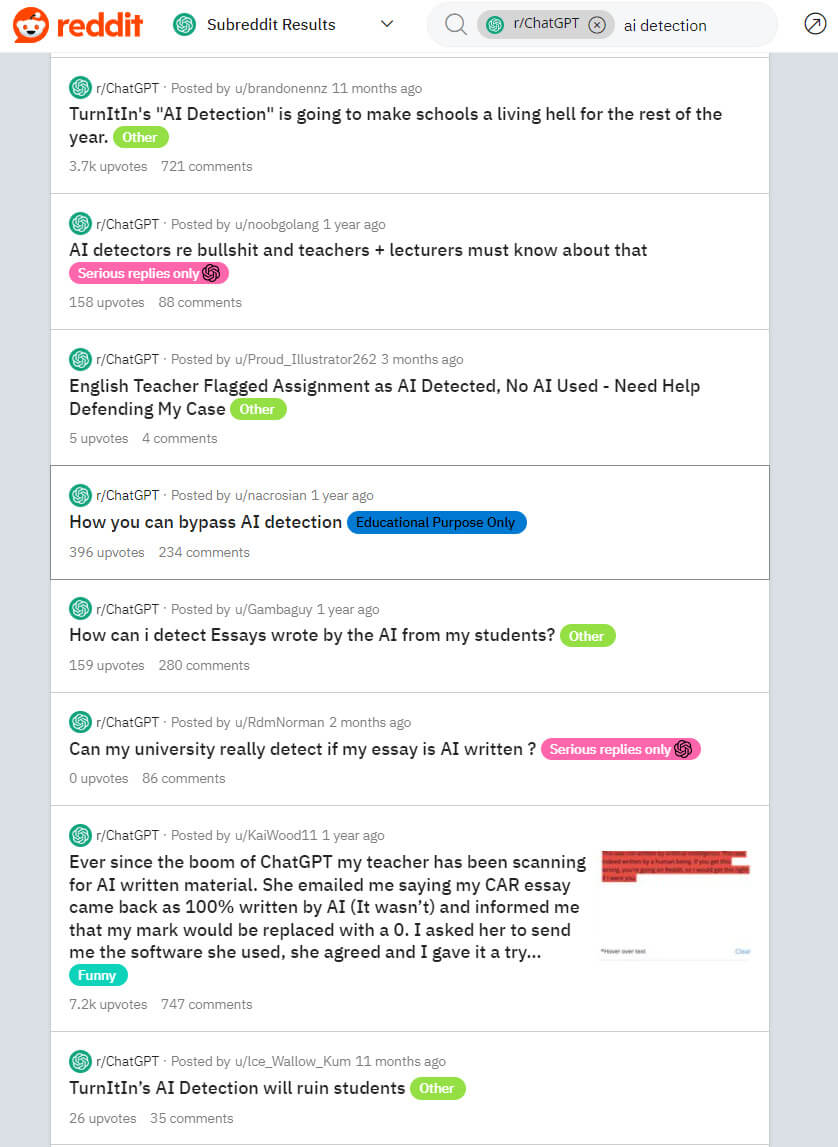
With educators using AI detectors to scan essays and assignments, I can’t tell you the number of stories I’ve heard about students facing penalties like failed grades, zero scores, or repeated submissions.
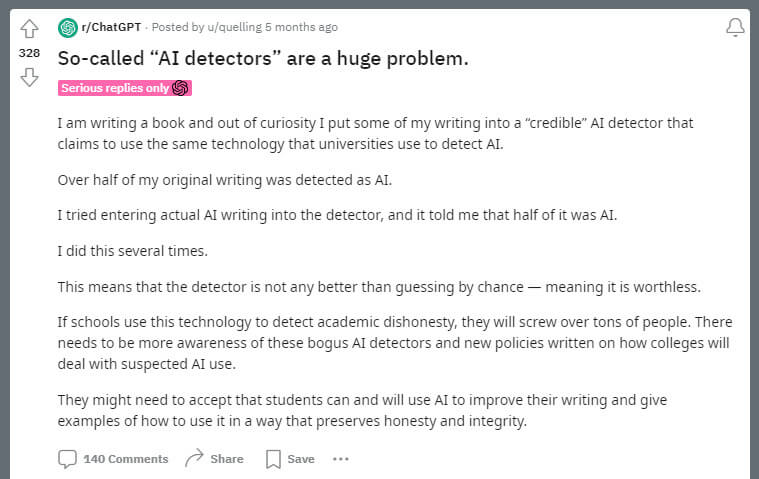
Source: https://www.reddit.com/r/ChatGPT/comments/1737115/socalled_ai_detectors_are_a_huge_problem/
But once again, it is important for me to point out that AI detectors are not faultless. Even a renowned tool like Turnitin is prone to errors, leading to unjust penalties for students.
This is why I heavily urge students to always humanize their AI-generated content, just to be safe. Otherwise, you risk educators questioning the authenticity of your work.
Wrapping It Up
As easy as it would be to surrender all the work to AI writing tools, I don’t think that’s an option. There must be a balance between AI writers and real human writers to truly create authentic, relatable, and engaging content. Luckily, I can confirm with certainty that using an AI humanizer like BypassGPT will allow you to achieve that perfect balance in just a few clicks.